
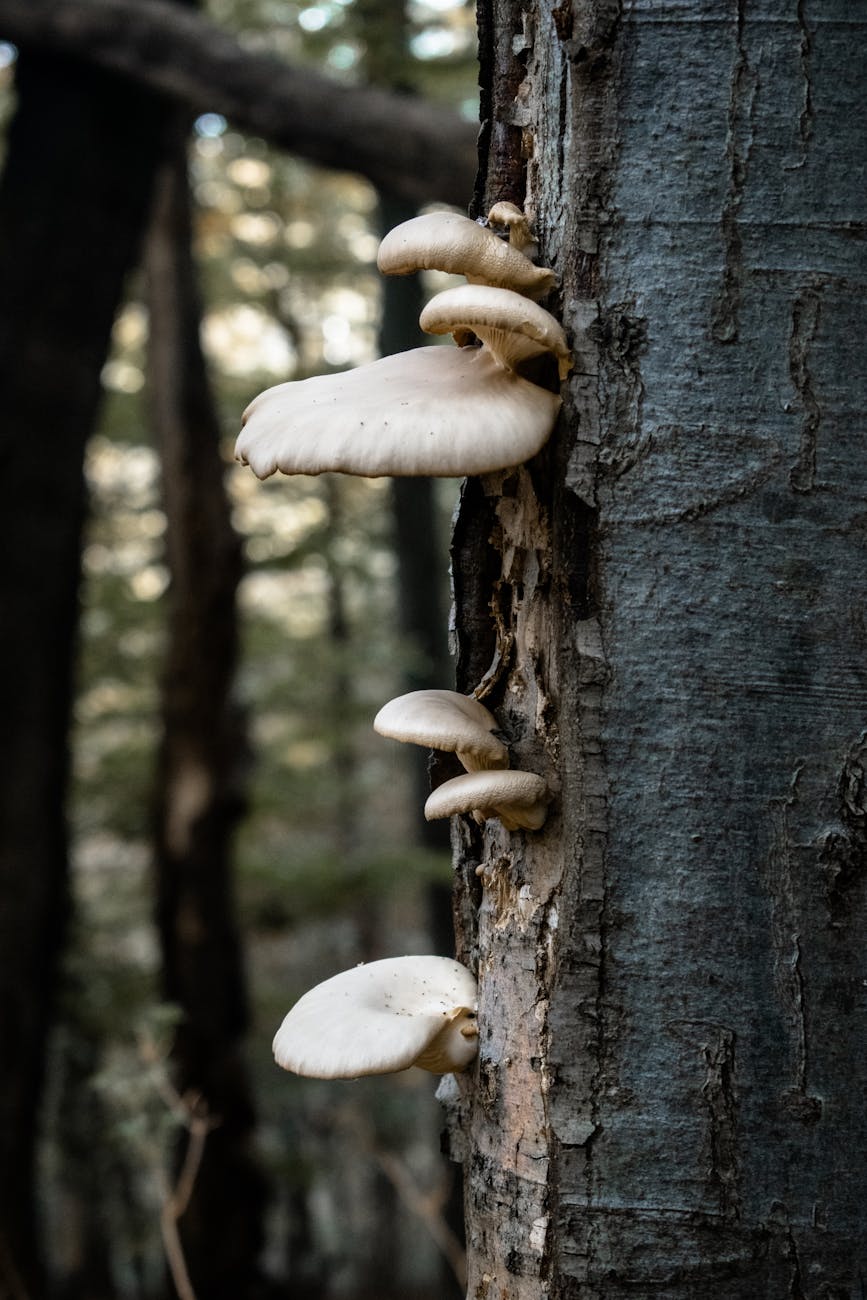
If you recognize these light colored, fan-shaped mushrooms that grow on logs and dead tree trunks, chances are you’ve seen the beloved Oyster mushroom (Pleurotus ostreatus) – one of the best mushrooms in the wild!
These mild mushrooms are not only a forager’s delight but also one of nature’s most fascinating fungi – and one of the best mushrooms to get started with in your foraging journey!
Let’s dive into how to identify them, keep yourself safe while picking, and why they’re such a good eat!
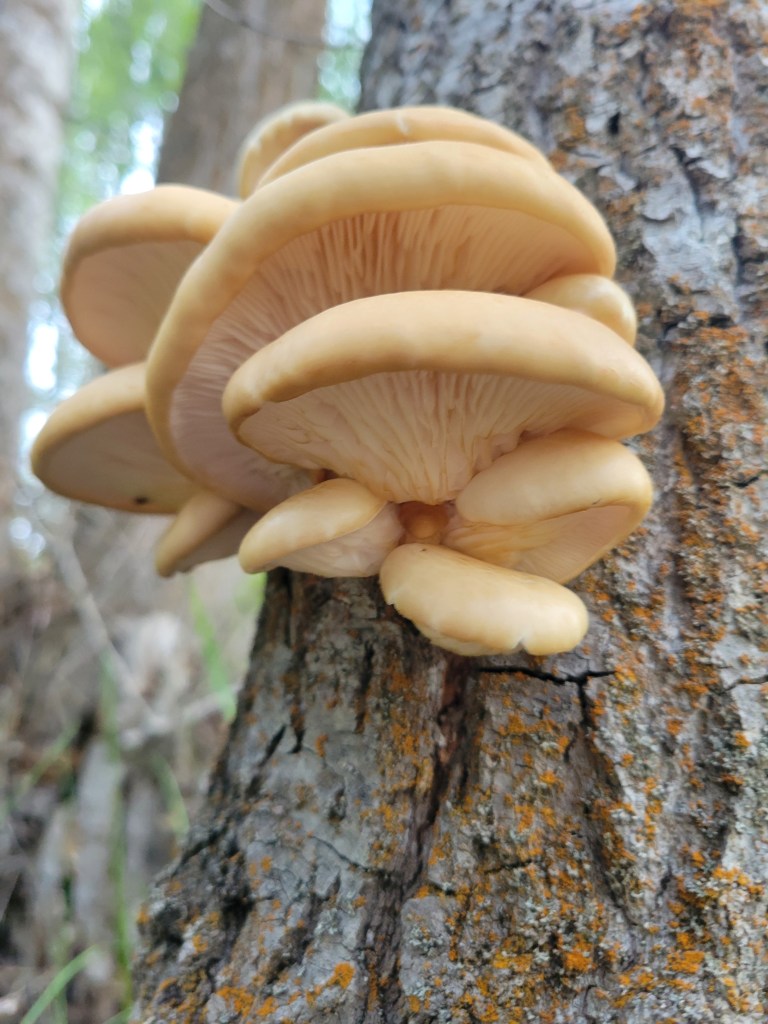
How to Identify Oyster Mushrooms
Oyster mushrooms are relatively beginner-friendly to identify, but careful observation is still important. Always cross reference your findings with reliable field guides or trusted foragers to prioritize your safety. Here’s what to look for:
- Shape: True to their name, oyster mushrooms fan out like an oyster shell. They often grow in overlapping layers.
- Color: They can range from bright white to soft gray, pale brown, or even light blue tones depending on the species and age.
- Gills: Their gills are white to pale gray and run down the length of the short, often nonexistent, stem.
- Texture: Oyster mushrooms have a soft and slightly rubbery feel. When they’re fresh, some people say they smell like anise or licorice, while others are convinced they smell like seafood or fish.
- Habitat: You can find them growing on dead or dying hardwood trees, especially beech, cottonwood and aspen!
They tend to pop up in cool, wet weather — so keep your eyes peeled after a rainstorm in spring or fall!
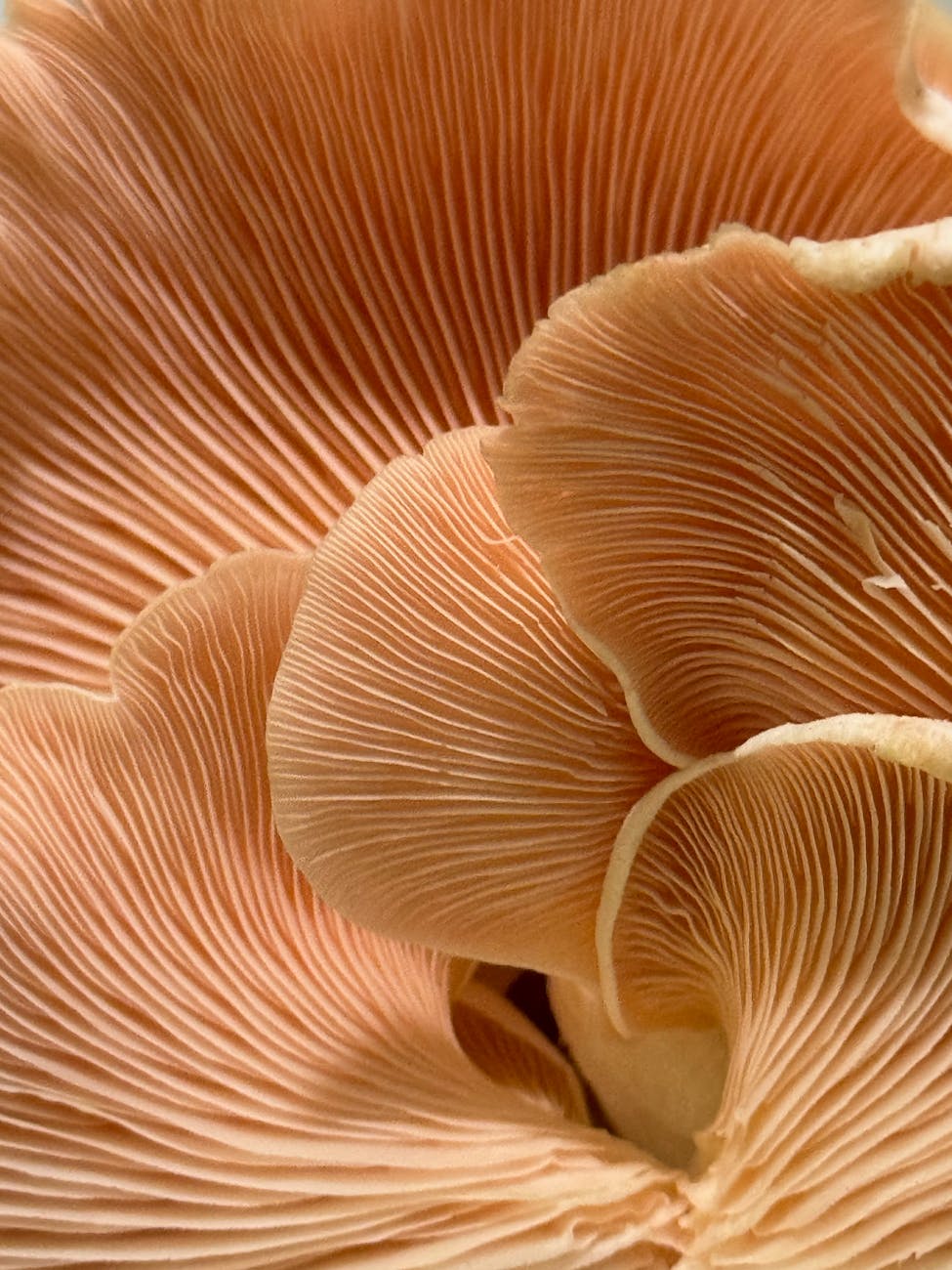
Safety Tips: Lookalikes and Cautions
Although oyster mushrooms are relatively safe, there are a couple of lookalikes to watch out for:
- Angel’s Wings (Pleurocybella porrigens) are smaller and a more bright white in color than the oyster, but can be very toxic. Some key differences are the brighter white color, and the visible presence of a stem on the angel’s wings.
- Elm Oysters (Hypsizygus ulmarius) look similar but have thicker stems and are also edible, though slightly tougher than the Pleurotus ostreatus.
When foraging, the golden rule always applies: “When in doubt, throw it out.” If you aren’t 100% sure of your find, consult an expert, use a trustworthy field guide, or join a local mycology group. Never eat anything you are unsure of!
Also, it’s wise to harvest from clean environments — not near roadsides, industrial areas, or polluted water sources. Mushrooms absorb toxins from their surroundings, so you’ll want to be mindful about where you are picking mushrooms from.
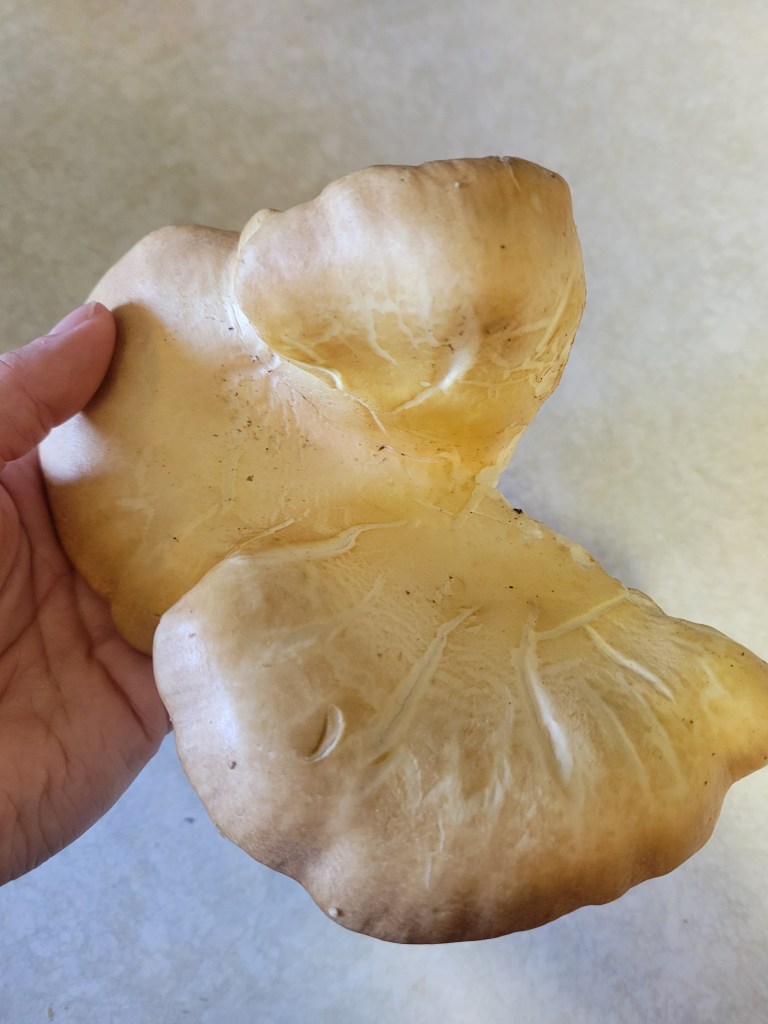
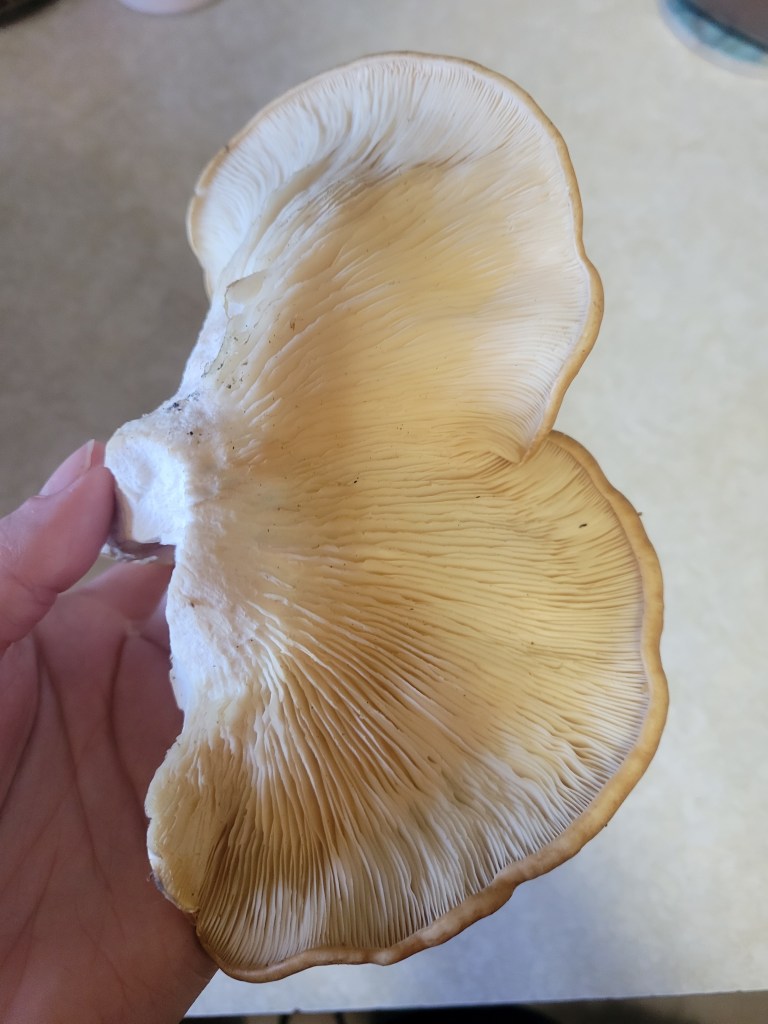
Edibility: Why Oyster Mushrooms Are a Favorite
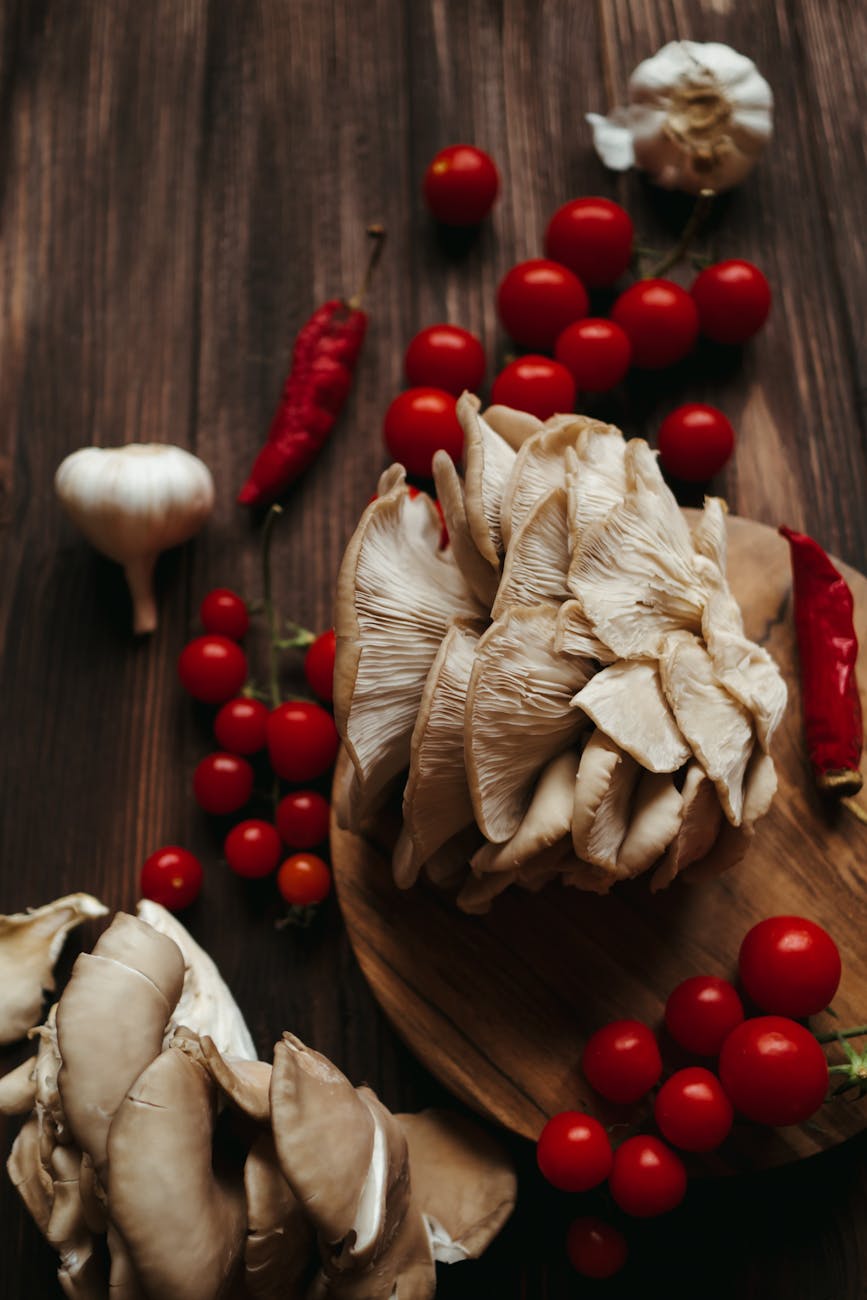
Oyster mushrooms are prized for their tender texture and mild, slightly seafood-like flavor — perfect for soups, stir-fries, and sauteés. They’re also packed with protein, fiber, and B vitamins, making them a smart wild food choice.
Fun fact: Oyster mushrooms are carnivores! They produce enzymes that paralyze and digest tiny nematodes (microscopic worms) within the mushrooms gills.
Quick Cooking Tip
To bring out their best flavor:
- Dry sauteé them in a pan until the water cooks off, then add butter, oil, and seasonings.
- Oyster mushrooms pair beautifully with garlic, thyme, and a splash of white wine!
- Enjoy in stir-fry’s, soups, or cooked with veggies!
Remember, always thoroughly wash and cook your wild mushrooms! Nature is full of dirt, bugs, and lot’s of other unappetizing things – giving your mushrooms a good rinse in the sink, and making sure they are cooked well will help to ensure the removal of any raw toxins or undesirables.
In Closing
Whether you’re a seasoned forager or just starting out, oyster mushrooms offer a rewarding and relatively safe introduction to the world of wild edibles. They are easy to spot, simple to identify, and delicious to eat!
Always remember to respect the forest, double-check your finds, and enjoy the incredible rewards that nature has to offer — one delicious mushroom at a time!
Thanks for reading, happy foraging!
-Jessica C.
 Bigfoot's Friend
Leave a comment