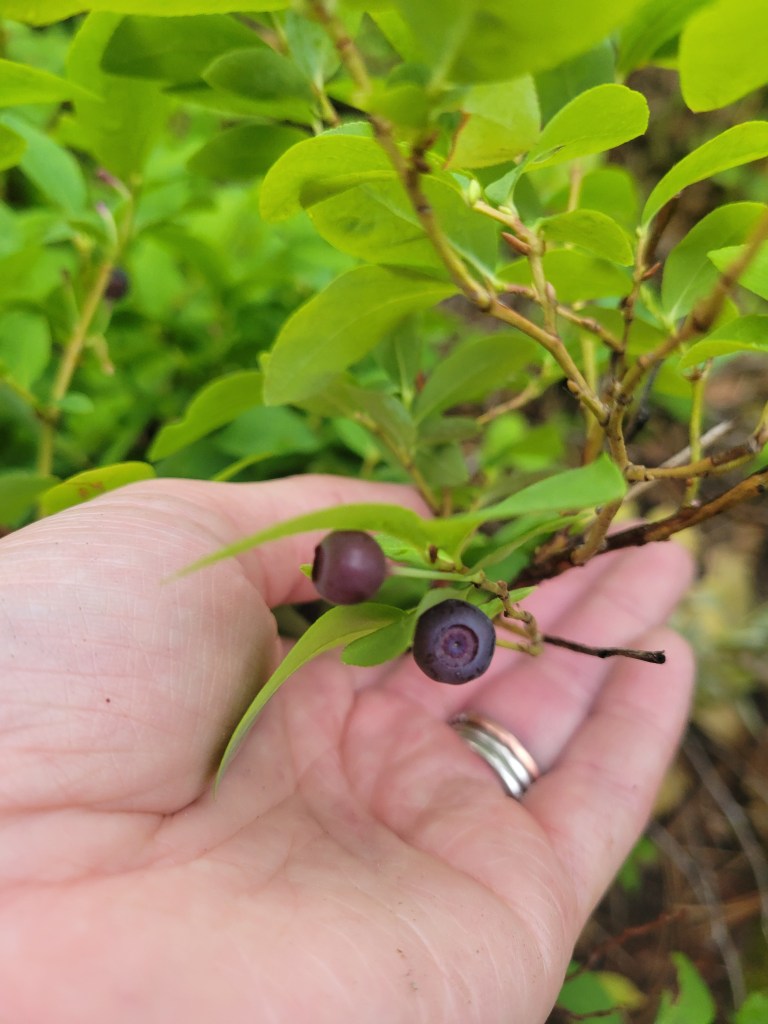
If you’ve ever wandered a mountain trail in late summer and spotted a glint of deep purple tucked beneath leafy green bushes, you might’ve already met the most sought-after berry in the Pacific Northwest: the huckleberry. There’s no overstating it—this little fruit has earned its cult status. Not just for its flavor (though that’s incredible), but because of how and where it grows, and what it takes to find it.
You don’t pick huckleberries—you earn them.
The Wild and Worth-It Hunt
Unlike most berries, huckleberries have refused to be tamed. Seriously—despite decades of effort, they just won’t grow on demand and can not be cultivated. These berries thrive on their own terms, in their own territory, often at high elevations in the mountainous regions of Montana, Idaho, Washington, and Oregon. And they only show up for a short time each summer—typically late July through August, depending on elevation and temperature.
You’re most likely to find them:
- In partially shaded, higher elevation forests
- Growing near fir, pine, or spruce trees
- In soil that’s acidic and rich in decaying organic matter
- Along well-established mountain trails that get just enough sun
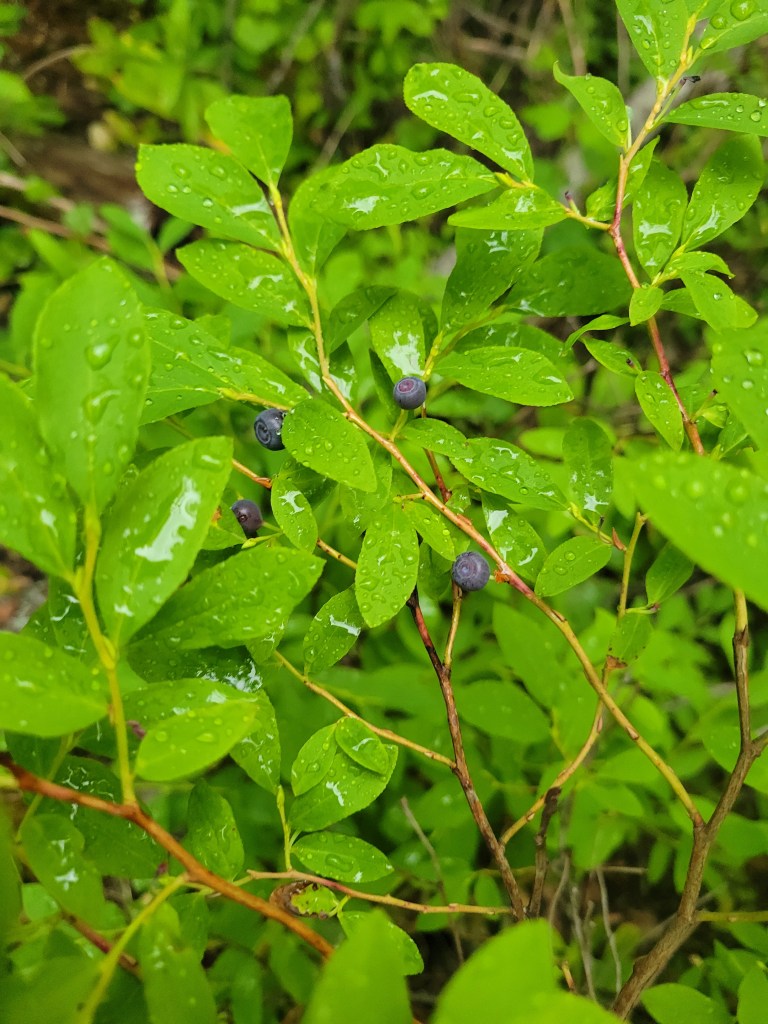
The bushes are often about waist-high, with thin, twiggy branches and smooth, dark green leaves. Once you know what to look for, you’ll start seeing them everywhere. But even then—it’s work. Your knees and back get sore, your hands get stained purple, and you’ll never quite fill a bucket as fast as you want to. But man, is it worth it.

A Tradition That Runs Deep
Huckleberries were harvested long before they became a trendy flavor. Indigenous tribes throughout the region, including the Salish and Kootenai, have held seasonal berry-picking camps for generations. These annual harvests were more than just a food-gathering task—they were social, spiritual, and cultural events. Berries were dried and stored, traded, or made into sauces and cakes that sustained people long after the summer faded.
Today, many locals still treat huckleberry season like a sacred tradition. Families plan trips around it. Trailheads buzz with whispers of “someone spotted berries last week up near the ridge.” And local shops proudly sell everything from huckleberry pie to lotion. But those who’ve tasted the real thing straight from the bush know—nothing store-bought even comes close.
Why All the Hype?
Here’s what makes huckleberries so special:
- They only grow wild. You can’t farm them like blueberries or raspberries—each one is grown from the mountains.
- The flavor is unique. Sweet and tart, with a taste that can’t be replicated.
- ️ Finding them is half the magic. It’s a full experience—hiking, searching, and enjoying the reward!
- They’re location-specific. Not everyone gets access to these berries—you have to go where they grow in the mountains.
Closing Thoughts on Huckleberries
The thing about picking huckleberries is, they make you slow down. You can’t rush them, and you can’t fake them. You’ve got to go out there, get a little lost in the woods, and earn every handful. But in return? You get a taste of the land, the history, and the moment—all wrapped up in a tiny, vibrant berry.
If you’ve never gone huckleberry picking before, I highly recommend giving it a shot. Bring a good bag, a friend, and a full bottle of water. Because once you find your first patch, I promise—you’re going to want to stay awhile.
Happy picking!
Jessica C.
 Bigfoot's Friend
Leave a comment