Huckleberries.
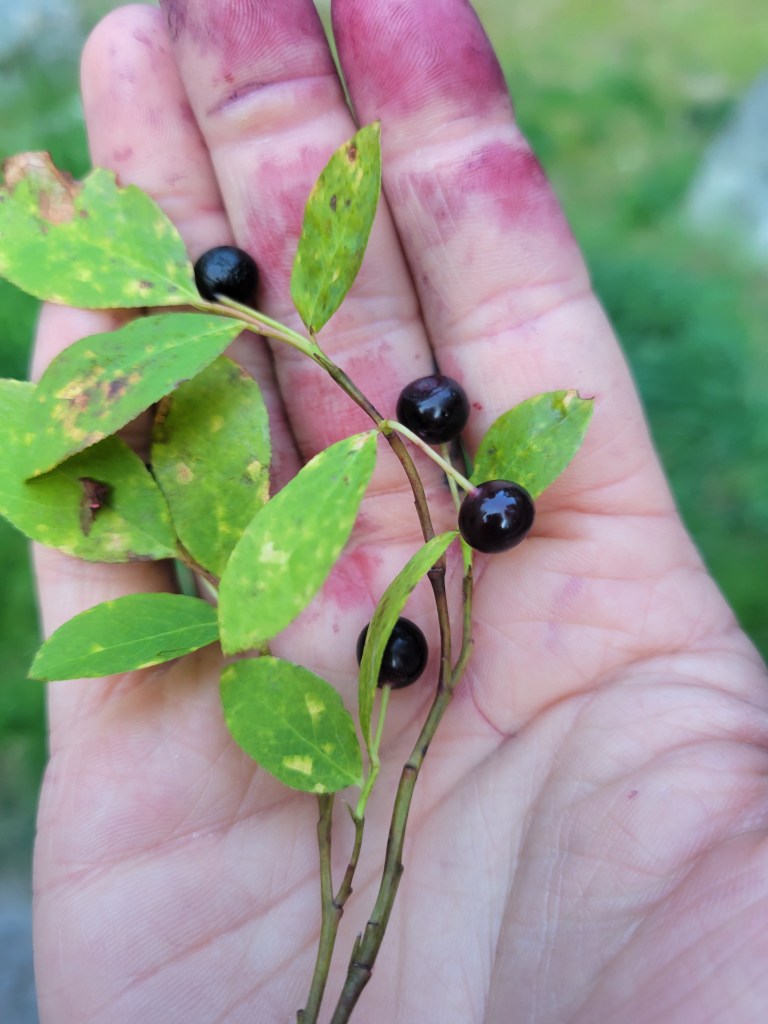
One of the best times of the year in the Northwestern corner of the United States is mid summer, when a hidden gem is flourishing amidst the towering trees and rolling hills – the elusive huckleberry.
As a passionate huckleberry forager, I’ve spent countless hours hiking and studying in my search for these magical little berries. With the experience I have under my belt, I wanted to help encourage others to join this adventure to discover when, where, and how to find these prized berries in their natural habitat.
Today we’re going to delve into some of the techniques and insider tips that will lead you to a huckleberry-rich season this summer.
So, grab your basket, sharpen your senses, and let’s dive into the exciting world of huckleberry foraging in the Northwestern wilderness – where every bush holds the chance of sweet, tart treasures waiting to be discovered.
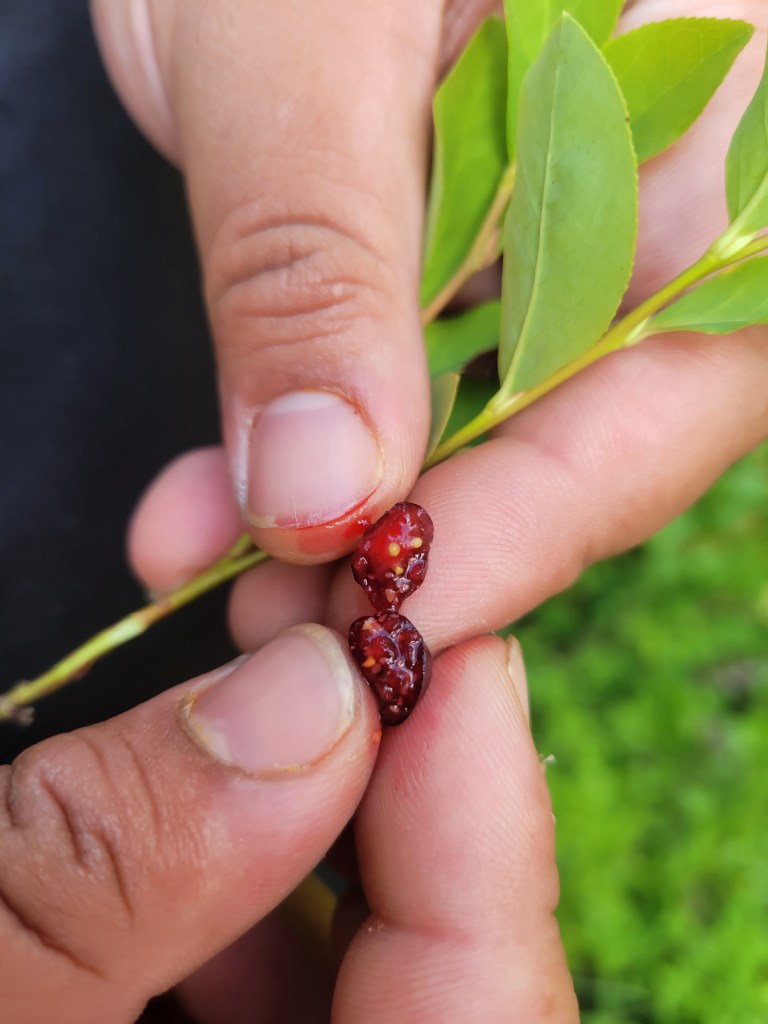
When Can You Find Huckleberries?
When:
Similar to most berry-producing bushes, the harvesting period for huckleberries is in the summertime, huckleberry season usually:
- Begins: Mid June – Early July
- Ends: Late August – Mid September
On good years, sometimes we will get 6-8 weeks of beautiful ripe berries, but it all depends on where you are and how far you’re willing to go.
The length of winter and the heat of the summer vary from year to year, which can affect huckleberry growth and production quite a bit.
Keep an eye on the weather and honestly take a look at your favorite huckleberry patches early in the season (if they’re easily accessible) to see how they’re responding to the weather. Every bush has a different experience every year, just because a spot thrives one year doesn’t guarantee that it will act the same the following season.
Tip:
- Berries in lower elevations are going to be ripe first (mid-June, early July), but that means that the higher elevations will still be producing ripe fruit when the lower elevations have gotten dried (and picked) up later in the season (end of August, into September).
Where Can You Find Huckleberries?
Where:
Huckleberry bushes grow along the Pacific Coast of the United States, from central California all the way through the Pacific coast of Canada up into Southeastern Alaska and they grow as far inland as Eastern Wyoming and Colorado in the U.S.
Howerever, the US states best known for their huckleberries are:
- Oregon
- Idaho
- Montana
- Utah
- Washington
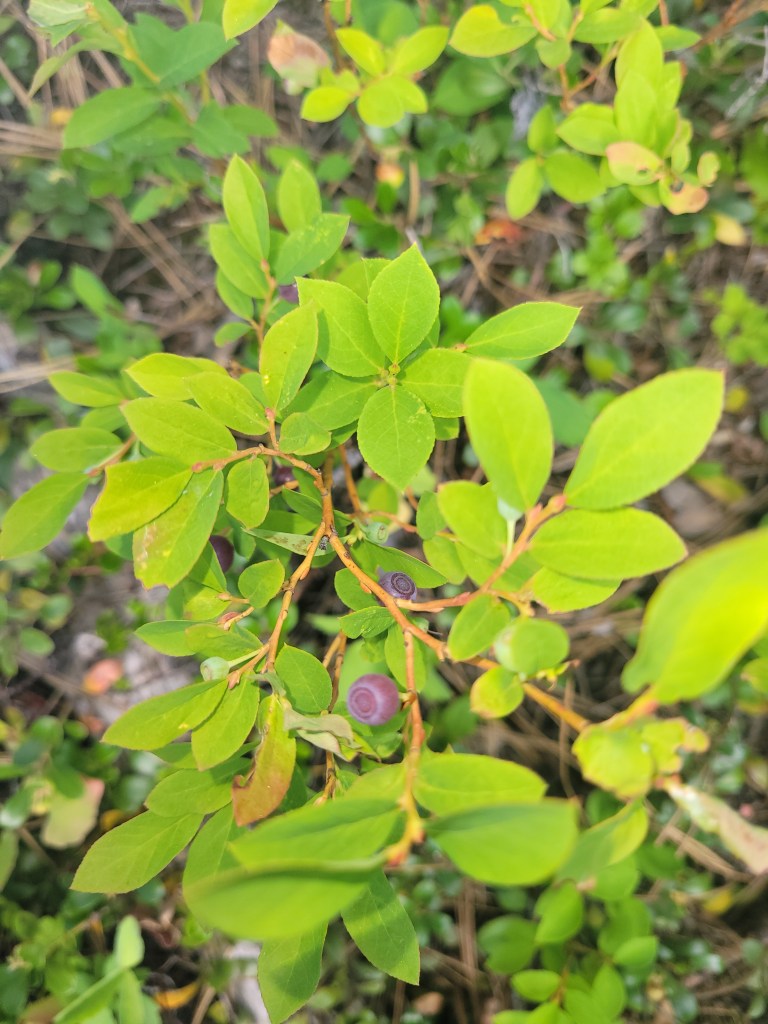
The bushes thrive in heavily grown sub-alpine forests, typically in areas with lots of pine and fir trees. Look for huckleberry bushes in mixed coniferous and deciduous forests, particularly in higher elevations ranging from 2,000 to 7,000 feet above sea level.
Huckleberry bushes thrive in diverse habitats across the Northwestern United States, favoring areas with acidic, well-drained soil and ample sunlight. They can be found in various ecosystems, including:
- Mountainous regions
- Forest understores
- Meadows
- Along the edges of streams or lakes
Tip:
- I’ve learned through my own foraging experiences that elevation is everything. The elevation where you’re picking has everything to do with what time of year your berries will be ripe, what variety of berries you’re going to find, and if you’re somewhere with varying accessible elevations, the length of the season you’re going to have.
How To Find A Huckleberry
How To Identify Huckleberries:
Now that we’ve established where in the world to find them, and what time of year they produce, it’s time to learn how to identify them!
Huckleberry bushes can be easily identified by their distinct features once you’re familiar with how they look.
- Huckleberry bushes typically grow to a height of 1 to 3 feet. (But can grow up to 10 feet in the right environment!)
- The stems have oval-shaped leaves with a glossy, dark green hue. The leaves are arranged alternately along the stems and have finely serrated edges.
- In late spring and early summer, clusters of small, bell-shaped white or pink flowers appear, eventually turning into the beloved berries
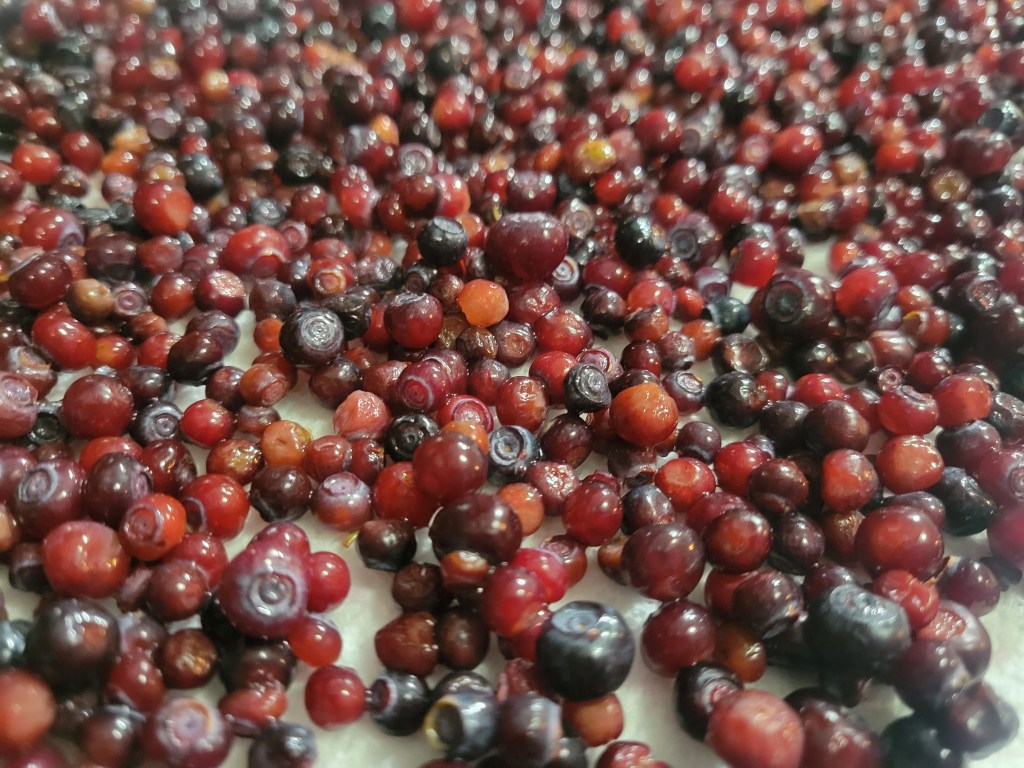
- The berries are round, and usually smaller than a blueberry, ranging in colors from deep purple to reddish-blue when ripe
- Huckleberries can be specifically identified by the distinct circular flare on the stem-opposing side of the berry
Huckleberry bushes grow in bunches, generally, once you find one bush you’ll see a whole line of them growing up the side of the mountain.
As elusive and mysterious as they are, once you recognize the plant you’ll see that they grow nearly everywhere in the mountains. During the peak of the season you could spend hours picking from one line of bushes, and if you keep walking you’re guaranteed to find more.
Tips for Foraging Responsibly:
When venturing into huckleberry territory, it’s essential to forage responsibly to ensure the sustainability of these precious wild berries and their ecosystems. Here are some of my tips for ethical huckleberry foraging:
- Harvest only ripe berries, leaving unripe ones to mature to contribute to future berry crops or opportunities for other foragers.
- Use a gentle hand when picking berries to avoid damaging the bushes or surrounding vegetation. I personally never use “berry rakes”as they can damage the plant, and it almost feels like cheating!
- Avoid trampling on huckleberry bushes and their delicate root systems by staying on designated trails or paths, and watching your step when you go off-path.
- Leave no trace by packing out any trash or debris and refrain from disturbing wildlife habitats.
- Consider harvesting berries in moderation, allowing wildlife and other foragers to enjoy the bounty of nature.
By following these tips, you can enjoy the thrill of huckleberry foraging while respecting the natural environment and ensuring the continued abundance of these delectable wild berries for generations to come.
Time to go find some hucks!
The hunt for the huckleberry is nearly as sweet and satisfying as the flavor they have. For generations, huckleberry picking has been part of family traditions and annual hobbies for the greater population of the PNW. The smell of freshly picked berries, the purple-stained hands, and the bags full of precious purple gold have locals and tourists alike crawling the mountains every year for at least a taste of what I like to call “The real Montana experience”. I sincerely hope that each and every one of you get the opportunity to enjoy the experience of foraging berries in the Rocky Mountains (or surrounding areas) at least once in your life.
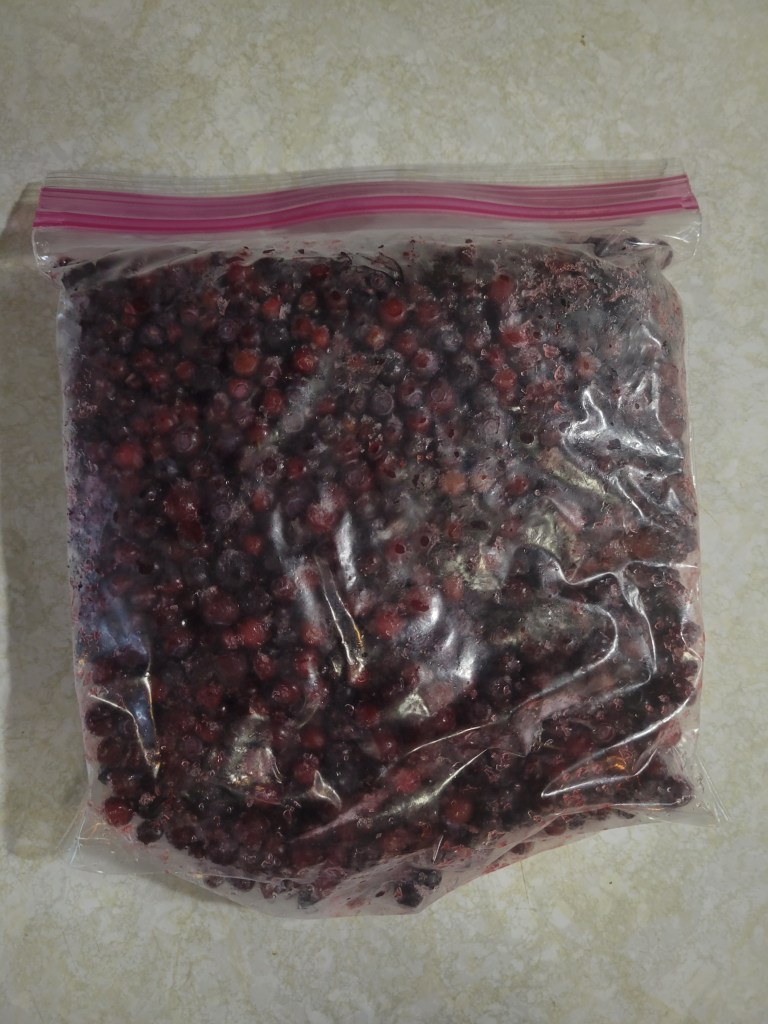
Well, I don’t know about you, but I sure am craving a cold slice of huckleberry cream pie after that! It’s about time to get out the freezer bag from this year’s harvest. Yum!
Happy foraging!
 Bigfoot's Friend
Leave a comment