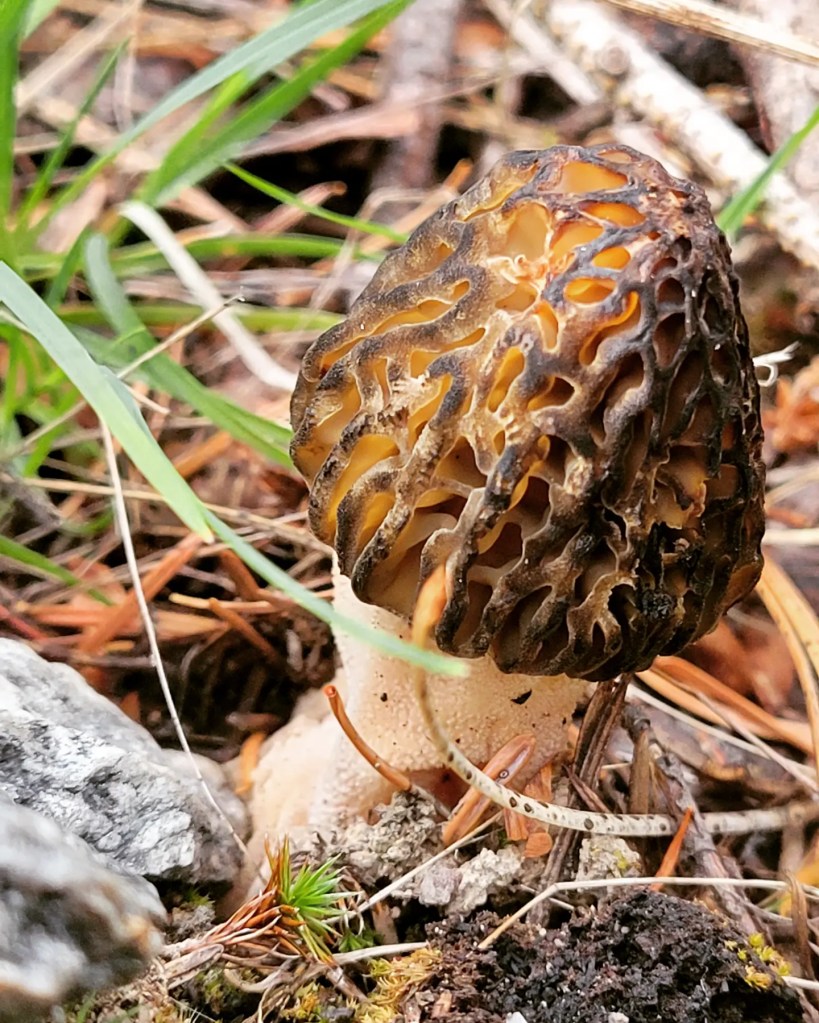
A few years ago, I learned about morel mushrooms for the first time. I had never seen a mushroom– or any wild plant for that matter, that looked anything like this before!
Morel mushrooms look like something out of a cartoon; however, they are very real, mysterious, and delicious!
Now, not everything that you’ll see in the forest is edible… So, before you start eating all the funky mushrooms you find, let’s learn how to identify a morel mushroom correctly!
**As an Amazon associate, I earn from qualifying purchases made through some of the links provided on this page at no additional cost to you.
Introduction to Morels:
Morels are so highly desired because they don’t like to cooperate with domestication, and their growth patterns are incredibly precise and nearly impossible to mimic.
There haven’t been very many documented studies done on morel mushroom growth patterns, which means the internet is full of a wide variety of theories and opinions on the different species of morels (Morchella), where and how they grow, sustainability techniques for foraging, and so much more.
With that in mind, I am sharing with you what I personally have found to be the most reliable and helpful information. When you are identifying plants (especially mushrooms) in the wild, it is always a good idea to cross-reference your findings with field guides, experienced foragers, and other trustworthy websites on the internet.
If you don’t have many friends who are experienced in foraging (most of us naturally don’t) you can find local groups on Facebook or other social media sites where kindred foragers in your area can assist in identifying yours, and others findings in the forest.
When and Where:
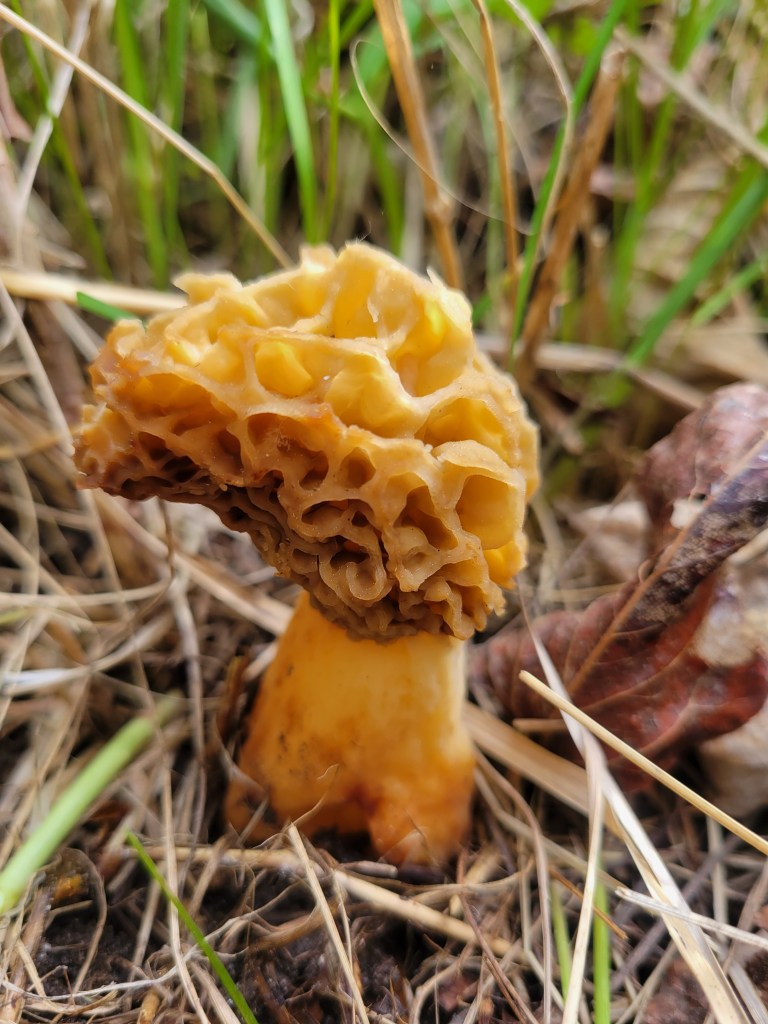
Morel mushrooms are a late spring/early summer treat. They grow from the ground because the mycelium (the mushroom’s version of a root system) grows underground and produces “fruit” above ground known as the morel mushroom! Morels can be found in a wide variety of environments and terrains, such as:
- On mountains and hills, specifically south-facing (the south-facing hills tend to get more sunlight)
- Near rivers/streams
- Near dead or decaying trees
- Around elm, oak, sycamore, pine, cottonwood, and fruit trees.
- Morels grow all around the Northern Hemisphere across the world and can be found in all 50 U.S. states!
- They tend to grow in loose dirt/soil
- February-April for southern states and lower elevations
- April-June for northern states and higher elevations
- “Burn morels” are aptly named because 1-3 years after a burn (wildfire, burn pit, campfire, etc.), you can find black morels growing directly from the burn site!
Mushrooms need humidity to thrive, so morel mushrooms are generally found in warm areas with ample sunlight and moisture.
The mycelium relies on neighboring plants for safety and nutrients, so sometimes, looking up to identify the trees mentioned above can be beneficial in your hunt for morels on the ground.
Size and Shape:
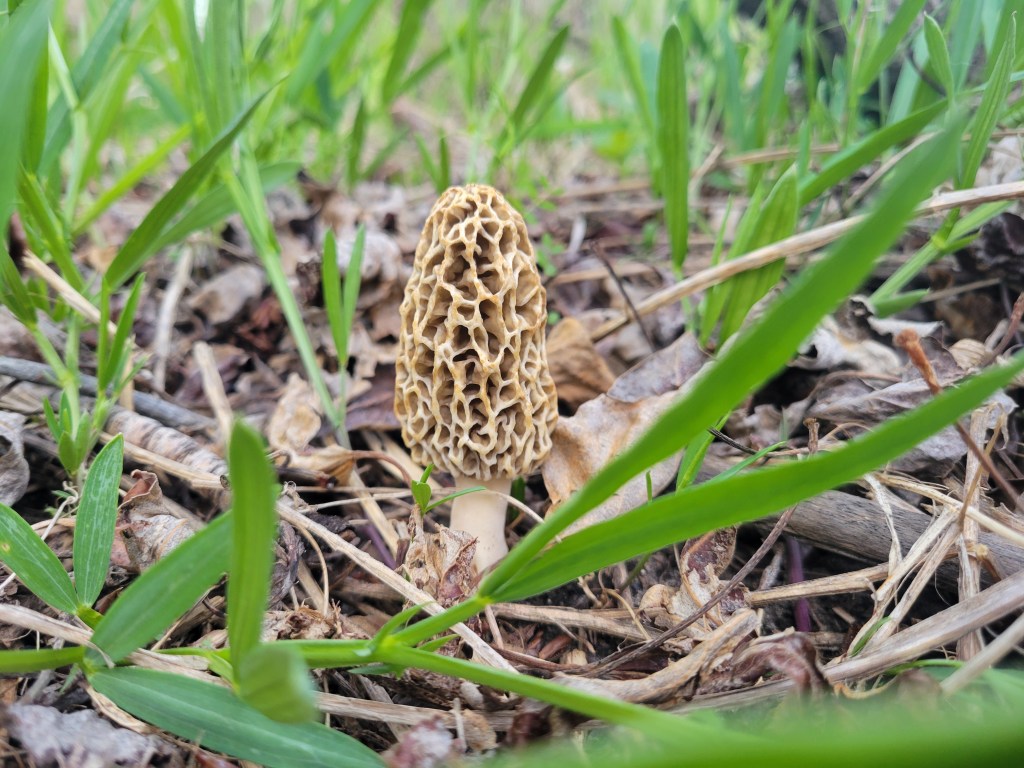
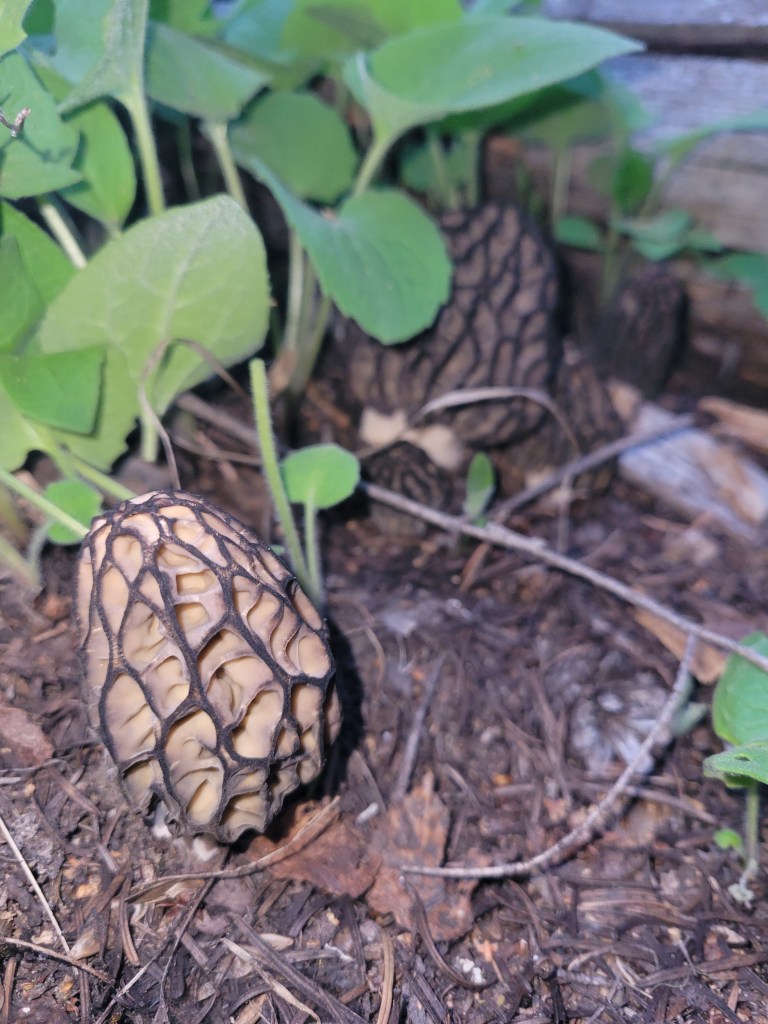
I’ve talked enough about how funky-looking morels are, so let’s dive into what exactly you are looking for when identifying one. When looking for a true morel, you’ll find them in various sizes and colors, but there are a few key identifying outer factors.
- 2”-6” tall on average. You can find larger and smaller ones; however, for culinary purposes, the smaller ones can be left to grow, and the larger morels should be inspected to ensure they have not dried out and gone to spore. (I’ll tell you more about sporing later)
- Ridged, deep crevasses throughout the entire cap of the mushroom
- The base of the cap should be completely attached to the stem
- Soft silicone-looking texture
- The caps can vary in color from light yellow to brown and nearly black.
- The stems tend to stay an off-white to beige/yellow color throughout the different species.
Morel mushrooms don’t have gills–the cap should be attached entirely to the stem.
If you find a mushroom resembling a morel but the cap is more wavy and lumpy rather than ridged, it is likely a false morel, which is a toxic lookalike.
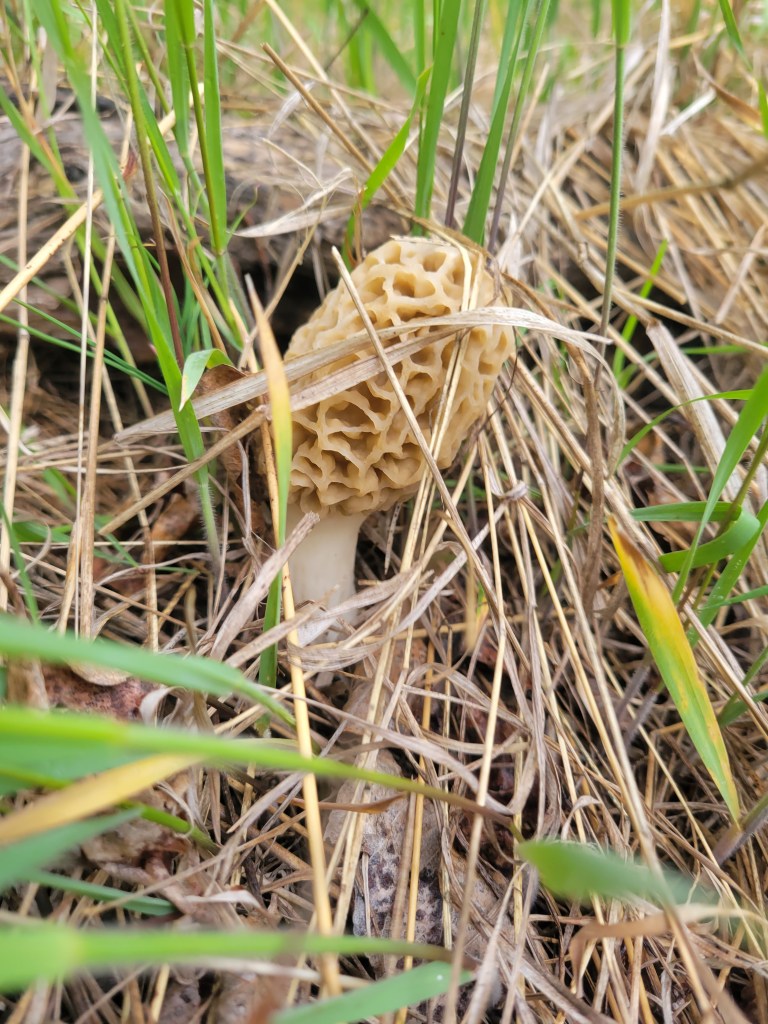
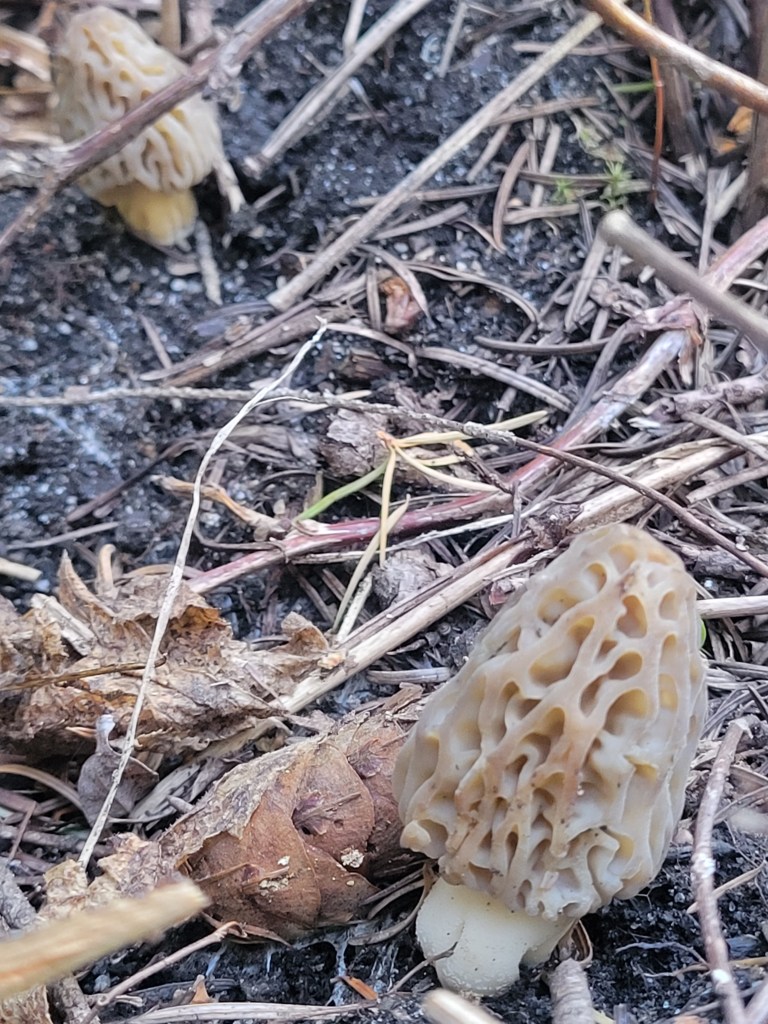
Because of the unique shape of the morel mushrooms, they can be challenging to spot in the wild. Pinecones and dried leaves are professional impostors of these delectable mushrooms, so you must keep a sharp eye out to find them!
The Touch Test:
The touch test is an essential tool in mushroom identification. Edible morel mushrooms should have these characteristics:
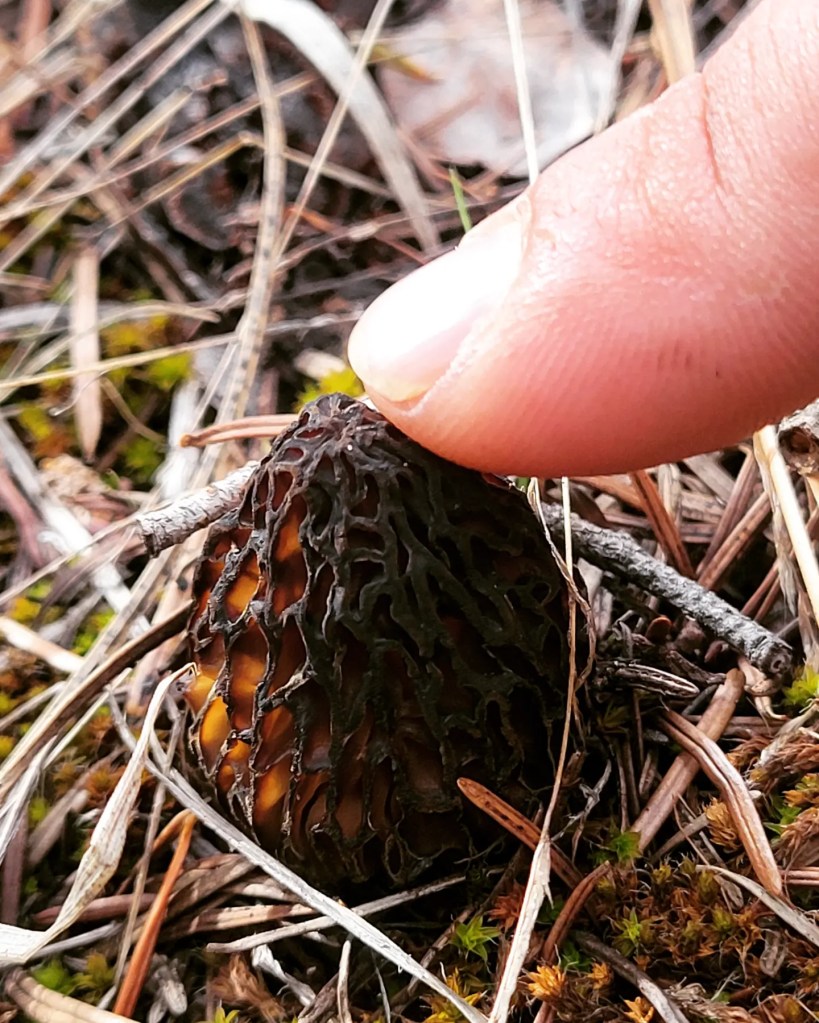
- A morel should have solid ridges and crevasses
- It should feel light – since morels are hollow inside, they don’t tend to weigh very much
- It should feel firm and almost rubbery
- The mushroom should feel moist, but not slimy.
- When cut or picked, the mushroom should be visibly hollow inside
When mushrooms are exposed to an excessive amount of moisture, or if they are too old and beginning to dry out, there is an increased chance that they have begun to mold. If you notice that the morel is excessively dry or wet, always do a thorough check to insure there is no mold growing on the mushroom, because it may no longer be suitable for eating.
Always check for soft spots, discoloration, dry spots, animal bite marks, and other odd blemishes, as they may signify a spoiled or decaying mushroom.
The Slice Test:
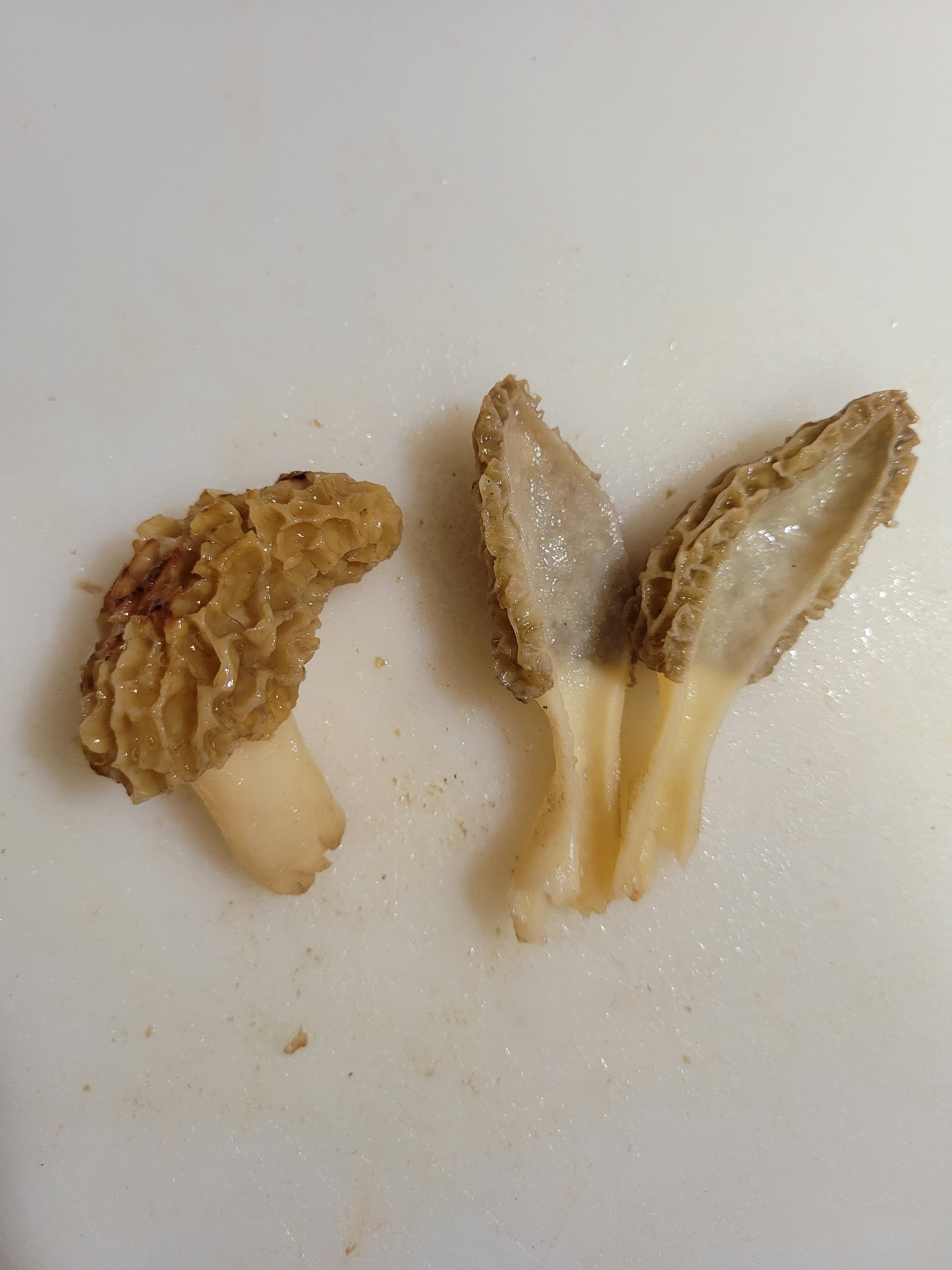
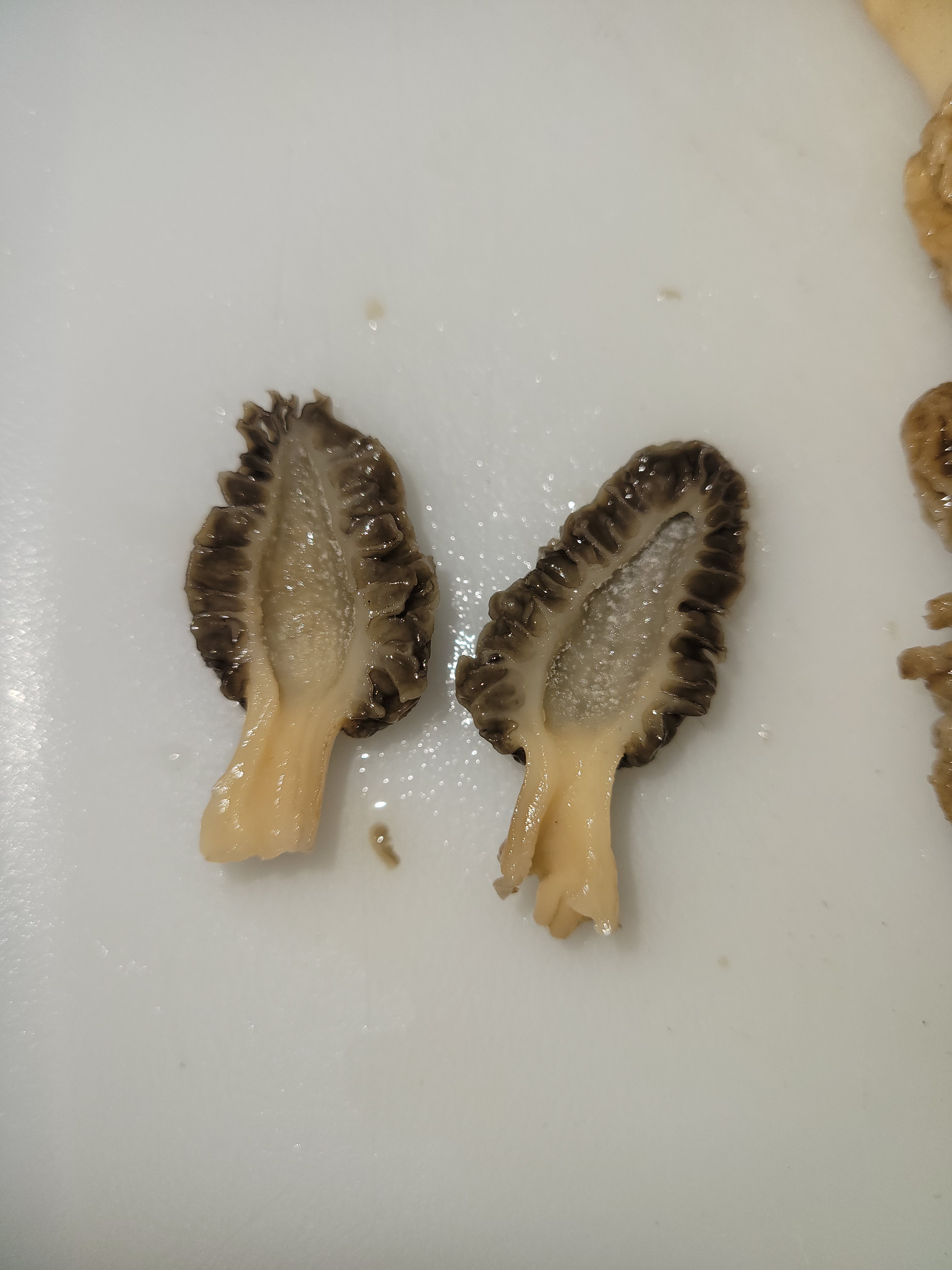
Now that you’ve checked all the boxes for the outer identification, it’s time for the moment of truth: the slice test. Slice the mushroom open to check the interior; the inside should be:
- It should be hollow all the way through – stem and cap
- Free of any fibrous or cotton-looking material, gills, or pores
- Should not change color or consistency
Remember that any substance inside the mushroom could mean it is not a true morel and could be a toxic look-alike.
The Spore Print Test:
Another identifying factor that adds an extra layer of certainty is spore printing. Every mushroom spore print is different, so it’s essential to research what it should look like based on the mushroom species you are identifying. Here’s how to conduct a spore print test:
- Cut your mushroom in half
- Place it open-side down on a piece of white paper or glass
- Cover it with a container and let it sit overnight
- Reference a reliable field guide comparing the color left on the paper or glass
- Morel (Morchella) spore prints will be a yellow/cream color
The color left on the glass or paper in the morning will tell you more about the species of mushroom you have! Morel mushrooms should leave a yellow/cream white spore print.
My Advice:
While foraging for mushrooms is an exciting adventure, it is crucial to prioritize safety. Seek guidance from experienced foragers and mycologists and reference reliable field guides to ensure proper identification. If you are ever unsure of any mushroom identification, throw it away. It’s never worth the risk of harming yourself or others if you aren’t positive that what you’ve found is safe for consumption.
Additionally, don’t forget that morel mushrooms must be cooked well before consumption to remove harmful toxins! Morels should never be consumed raw, and should not be consumed in large portions. Always take extra caution when eating wild mushrooms!
Look for local foraging groups in your area, and join foraging communities online to help expand your knowledge base and access to experienced individuals in this field.
You can learn more about foraging mushrooms in my other post– Mushrooms: Best Tips and Methods for Foraging!
All in all, foraging is such a rewarding hobby that I encourage everyone to try their hand at it. Learning more about the world around us will help you to build self-sustainability, knowledge, and confidence. Plus, a little bit of sunshine and a brisk walk never hurt anybody!
Thanks for reading, and happy foraging!
-Jessica Chaidez
 Bigfoot's Friend
Leave a reply to Simple Ways You Can Make A Difference: Sustainable Foraging – Bigfoot's Friend Cancel reply