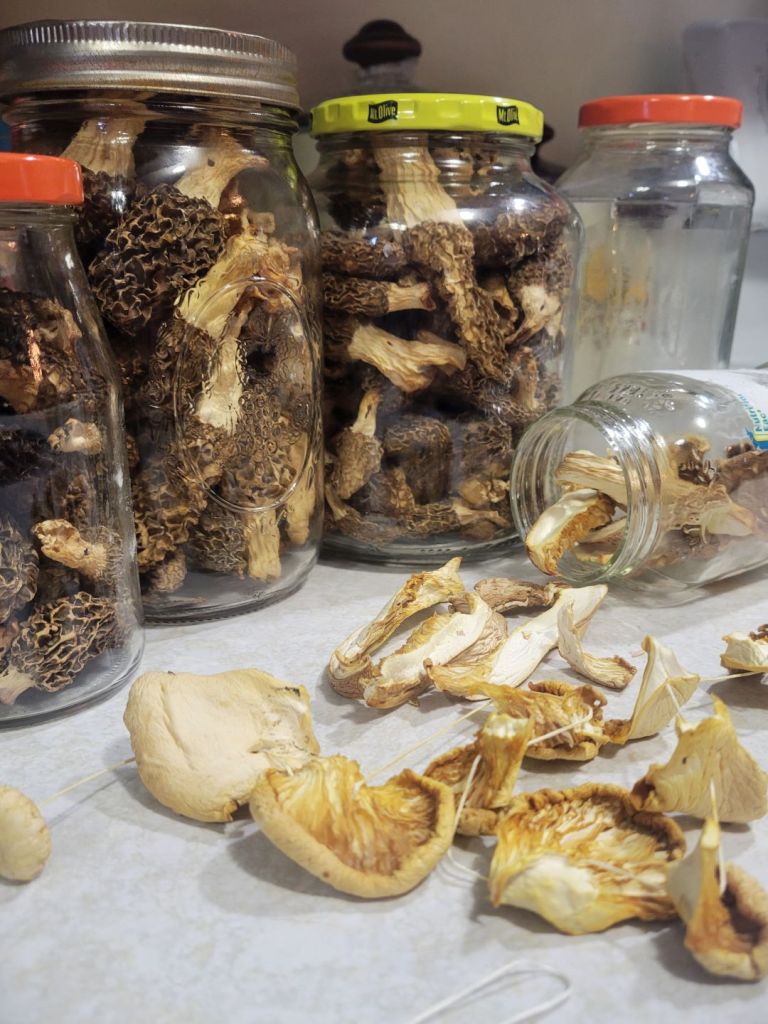
Spring foraging is in full swing, and foragers across the globe are packing home POUNDS of mushrooms every day!
If you’re lucky enough to find more mushrooms than you can eat in a few days, I’m sure you’ve looked into how to preserve them and found articles and advertisements for days pointing you towards
- Dehydrating
- Canning
- Pickling
- Freezing
All of which can be complicated and expensive.
I, as I’m sure many of you, do not own a dehydrator, do have limited freezer space, and probably don’t have time or space to build giant drying racks.
So this year, I tried something new to preserve our excess mushroom harvests for free – air drying.
It only takes a few simple steps!
- Wash your mushrooms
- Thread string through the mushrooms
- Hang up to dry
- Store and put away for future meals!
It’s free, it’s effective, and drying mushrooms has been our society’s preferred method of preservation for generations.
There’s got to be something to it, then, right?
What You Will Need
- Sewing needle
- Thread (fishing line works, too!)
- A window to hang them by
- Fan (optional)
Step 1: Wash
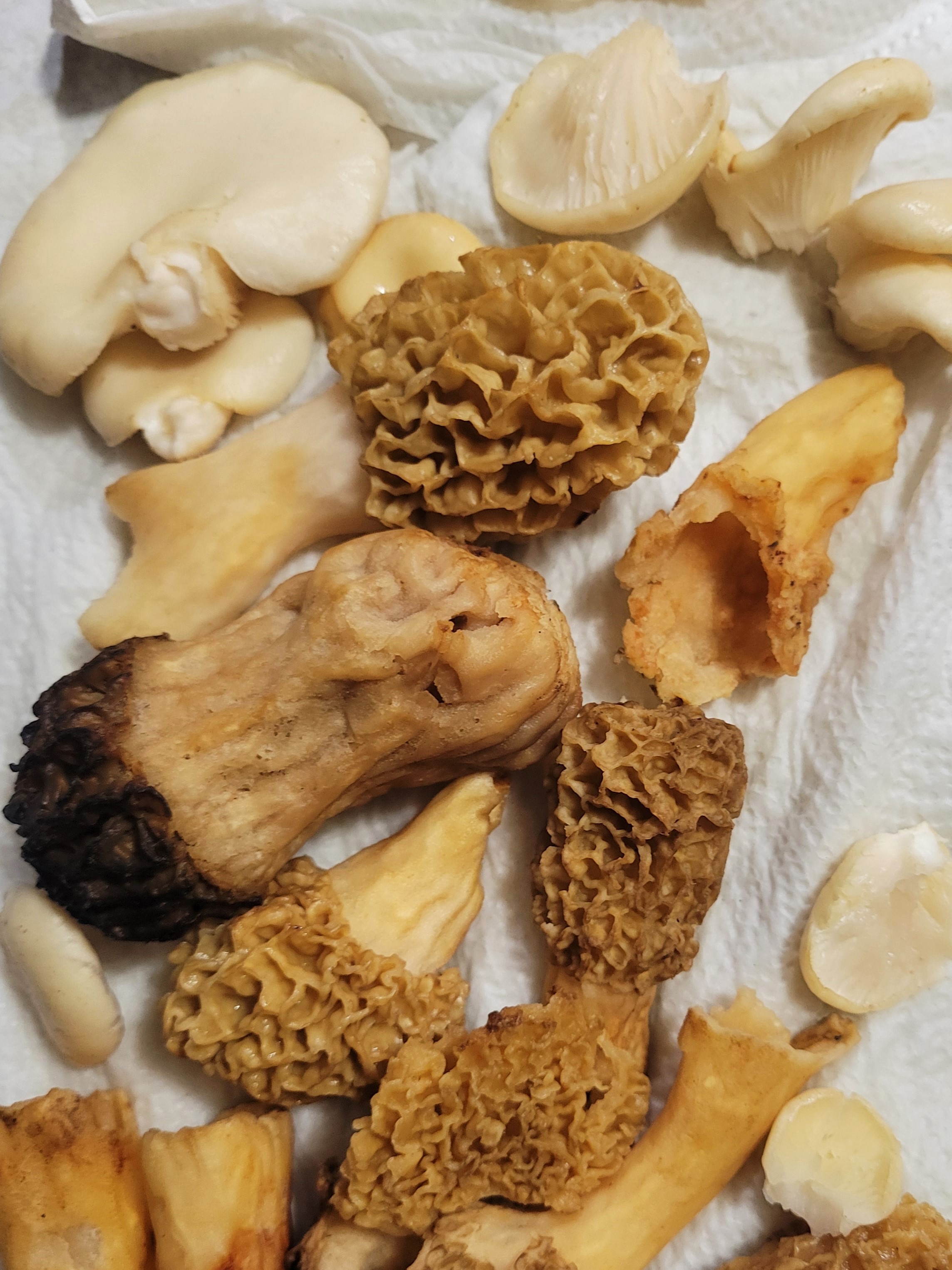
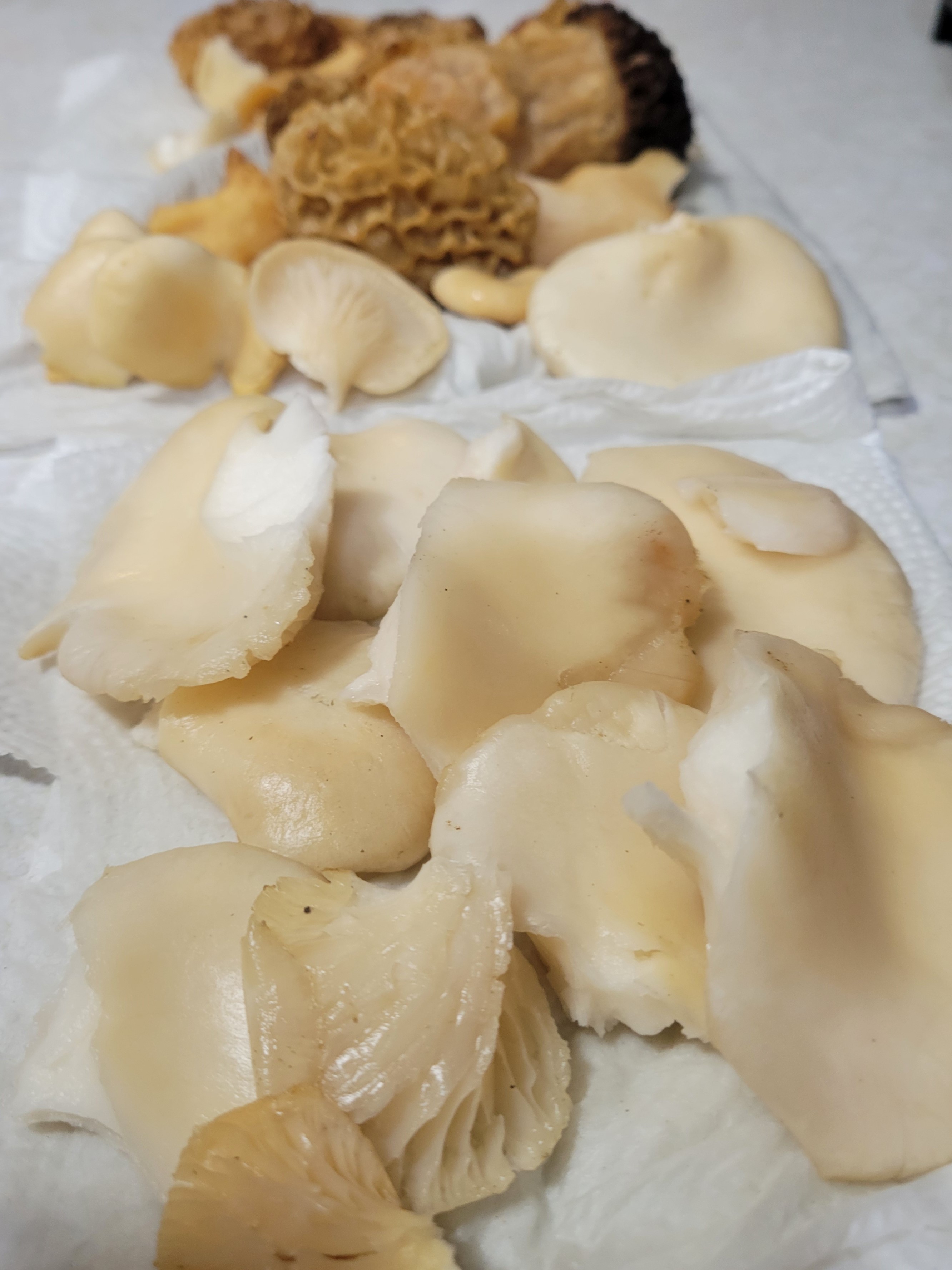
First step – Rinse your mushrooms thoroughly!
Mushrooms of all types tend to be hosts to many bugs, snails, and, of course, lots of dirt.
Since the goal is to dehydrate the mushrooms, you aren’t going to want to do a full salt water soak until you are ready to rehydrate and eat them.
However, you don’t want to preserve all of the bugs and dirt that are stuck on and sometimes in the mushrooms, so you’ll want to give your mushrooms a thorough rinse, making sure to check for any bugs or snails that could be hiding in the gills or crevasses.
Usually, I’ll rinse mine off in a strainer and lay them flat on towels to soak up some of the moisture before threading.
Step 2: Thread
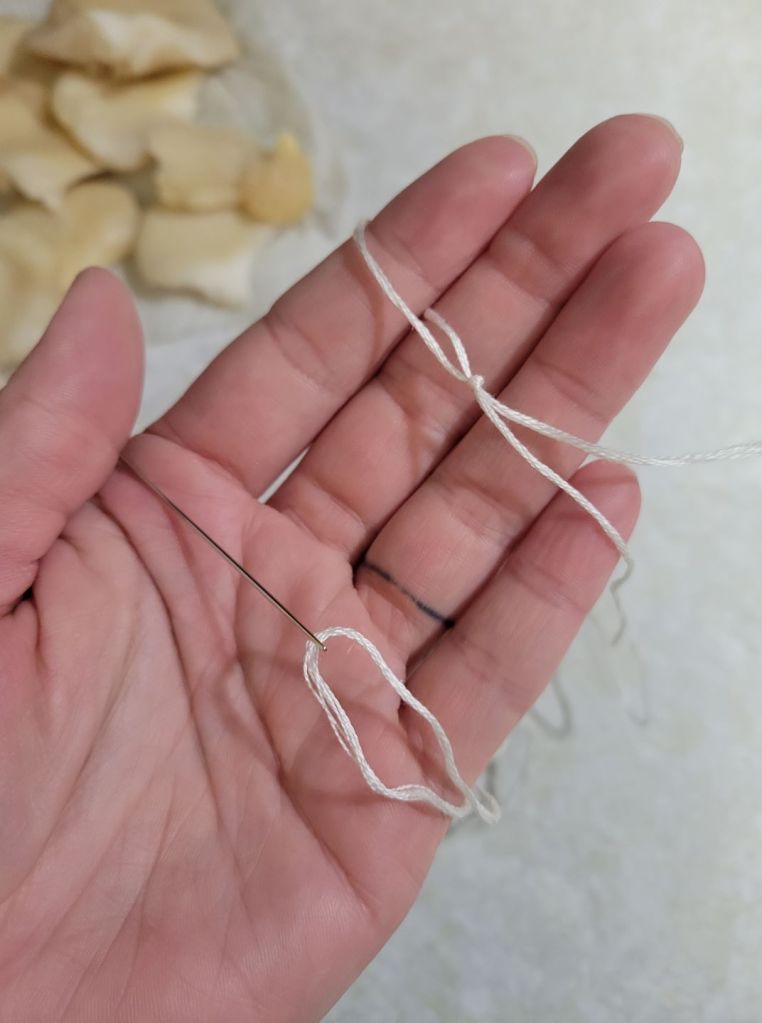
Start by single threading your needle and tying a loop at one end of the thread to hang it by. I usually use 1 1/2′ – 2′ of thread per string. I hang mine by both ends, so I tie another loop at the opposite end once it’s full.
Thread your mushrooms about 2″ apart, tying knots in between to keep them separated.
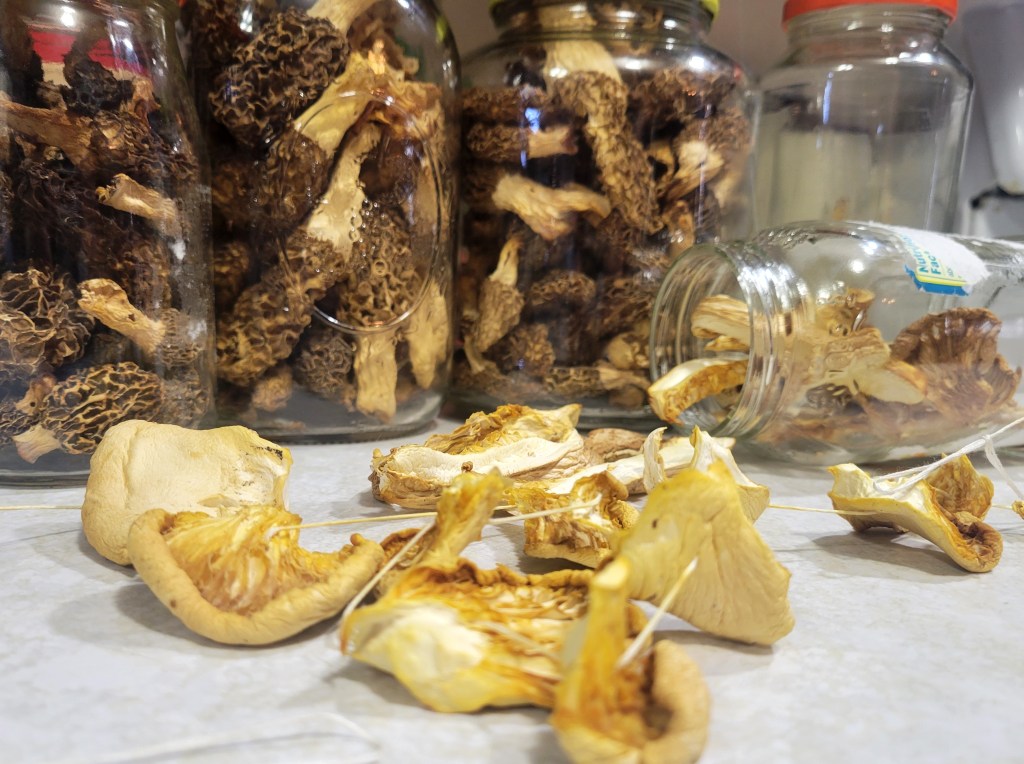
If you’re dehydrating something like oyster mushrooms or puffball mushrooms, I suggest cutting your mushroom into slices before stringing to assist in the drying process and prevent molding.
Step 3: Hang
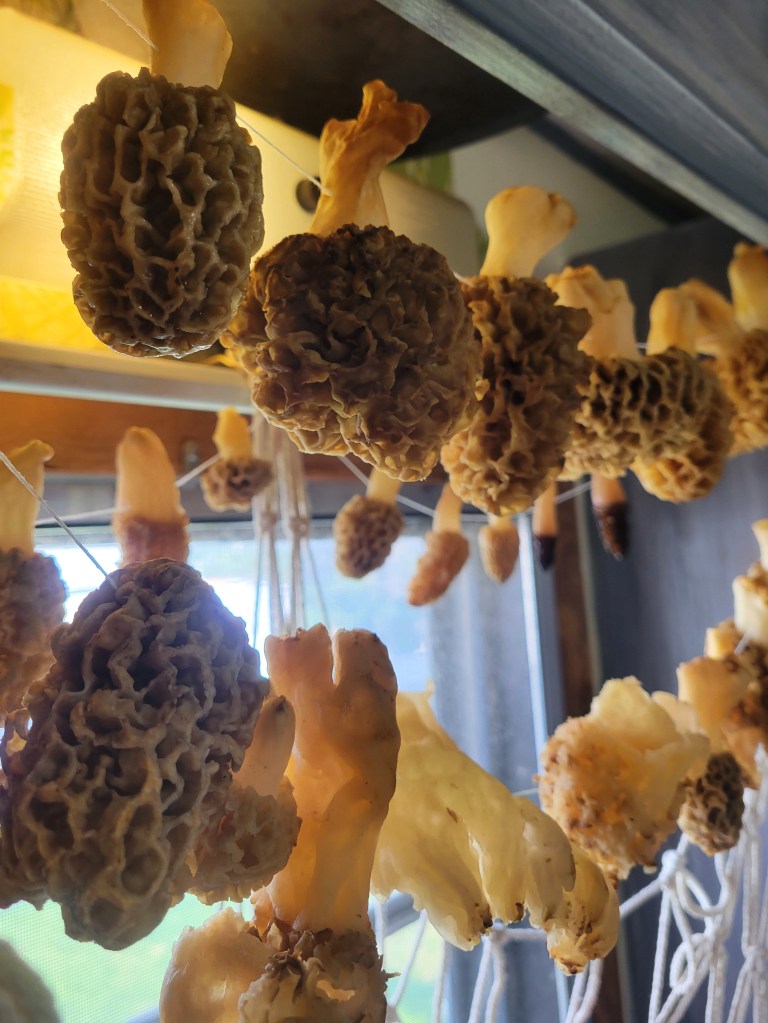
I would suggest using thumbtacks or even your curtain rods to tie your string of mushrooms onto if you’re not keen on putting nails or hooks into your walls. I happen to have a fruit basket hanging in my kitchen window, so I hang my mushrooms from the hooks that my fruit basket is on.
Hanging your mushrooms by a sunny window will help to dehydrate them quicker. If it’s raining or if you live somewhere with a lot of humidity, I would suggest keeping the window closed – otherwise, a warm breeze can be extremely helpful!
If you have a floor fan, you can set it to point at the mushrooms for some additional airflow. With my mushrooms in the window and a fan blowing, it usually takes about 48-72 hours for them to fully dehydrate (depending on the size of the mushrooms).
You’ll want to ensure your mushrooms are 100% dry before storing them. Any moisture left in the mushrooms will cause them to mold when stored, which will make them inedible.
Step 4: Store
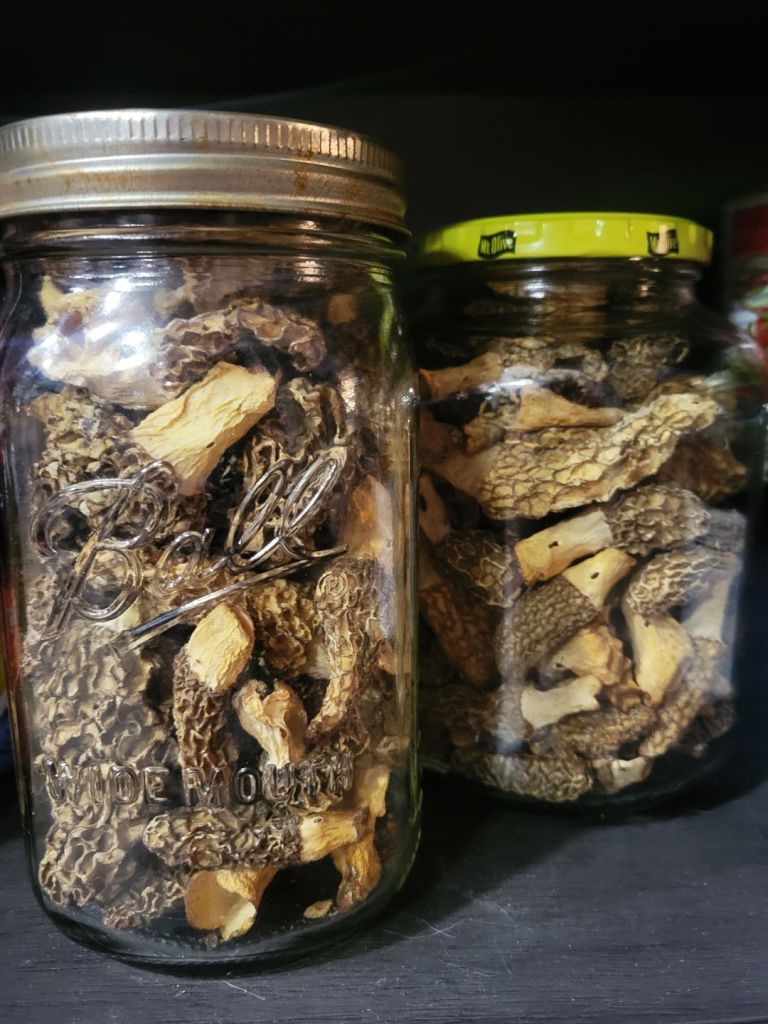
The best methods for storing dehydrated mushrooms are in canning jars (or reused pickle, marinara, or salsa jars) or simply in resealable bags.
I come from a family of canners, so with the surplus of canning supplies that have accumulated over the years, I tend to use canning jars for my mushrooms. They store well and sit nicely in the pantry.
However, it’s very common to see dehydrated mushrooms of all types stored in resealable bags, so this method works perfectly fine, too!
Mainly, you’ll want to ensure your mushrooms are in an air-tight container.
Dehydrated mushrooms should be shelf-stable for up to 3+ years!
Tips For Rehydrating
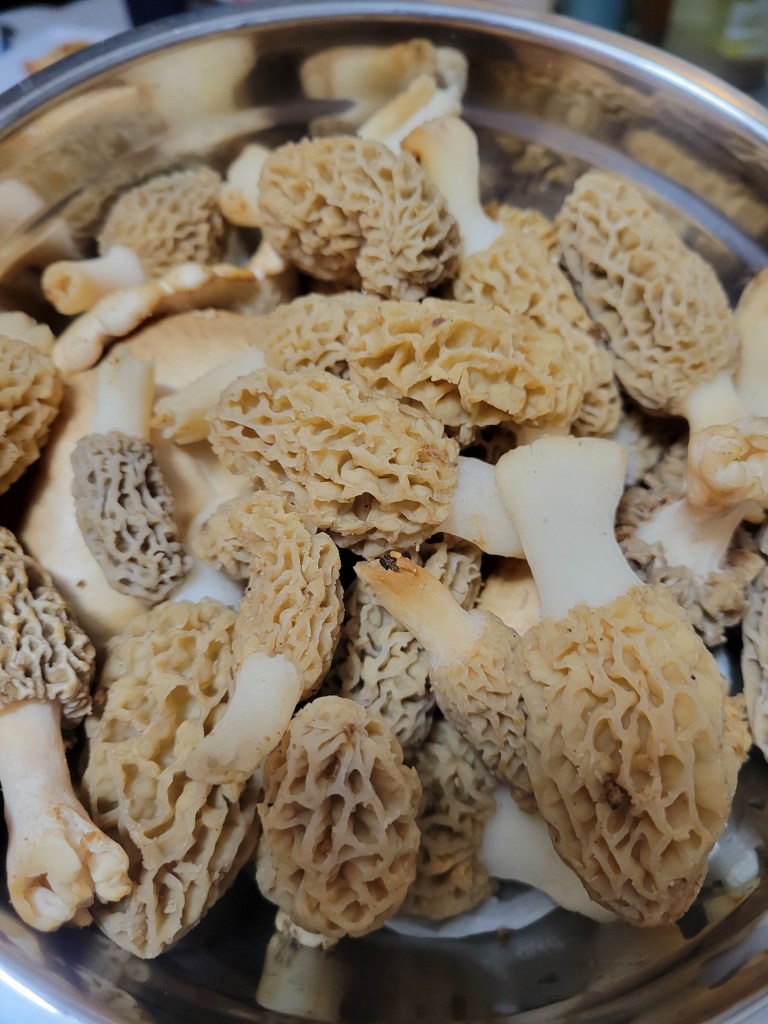
When you rehydrate your mushrooms for use, you’ll want to make sure to rehydrate in a saltwater soak.
Fill a bowl with water and an ample amount of cooking salt. Add the desired amount of mushrooms and let them soak, stirring occasionally, until fully rehydrated.
Rinse your rehydrated mushrooms well, and remember to always cook wild mushrooms thoroughly!
I’d love to hear about your favorite mushroom preservation methods in the comments!
Sharing our experiences and knowledge to help better the lives of those around us is such an important piece of sustaining thriving communities.
I hope this helps you to be able to preserve your hard-earned harvests this year, so you can enjoy the delicacies of the forest year round!
If you want to learn more about foraging mushrooms, check out my other post, Mushrooms: Best Tips And Methods For Foraging
Thanks for reading, and happy foraging!
Jessica C.
 Bigfoot's Friend
Leave a reply to Fun Forest Find: Elfin Saddle (Helvella Vespertina) – Bigfoot's Friend Cancel reply