Have you ever been on a hike and noticed something growing on a tree that almost looked like… a human ear?!
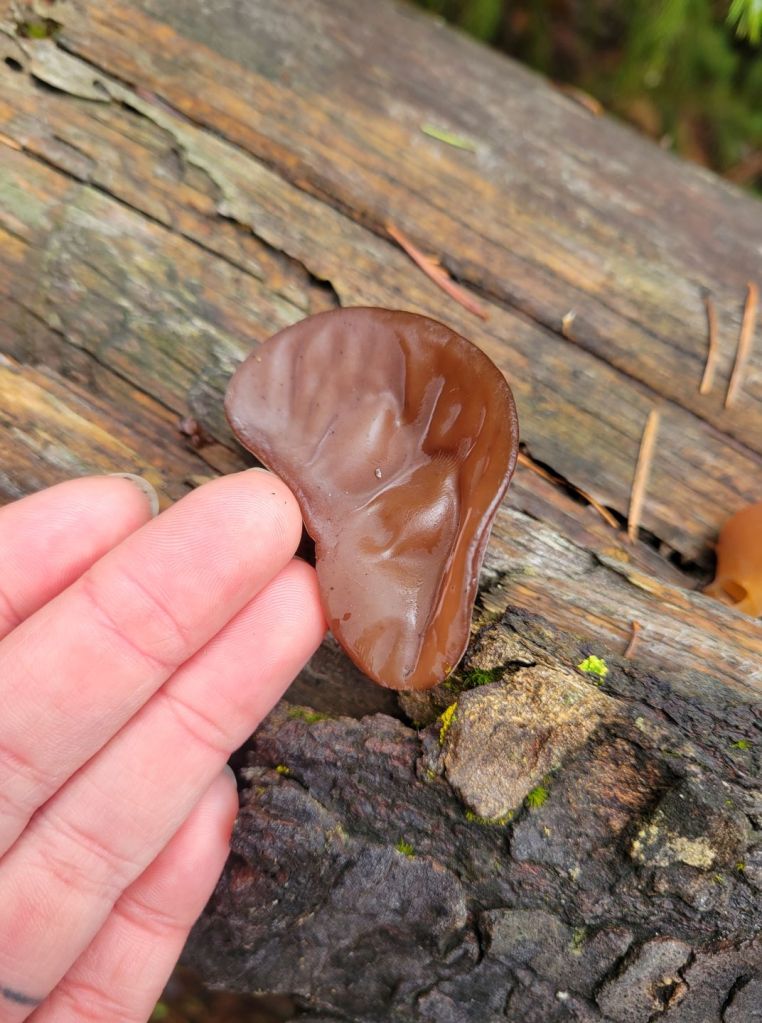
Well these funny little things are in fact mushrooms (a type of jelly fungus to be precise) and they’re edible, too! I’m sure you can guess how they got their common nickname.
Wood ears tend to pop up around early springtime and late fall. Generally, you’ll only find them on dead wood (fallen trees) and they are pretty resilient mushrooms, so given the right weather conditions, they can stick around for quite some time. (As long as nobody finds them to forage!)
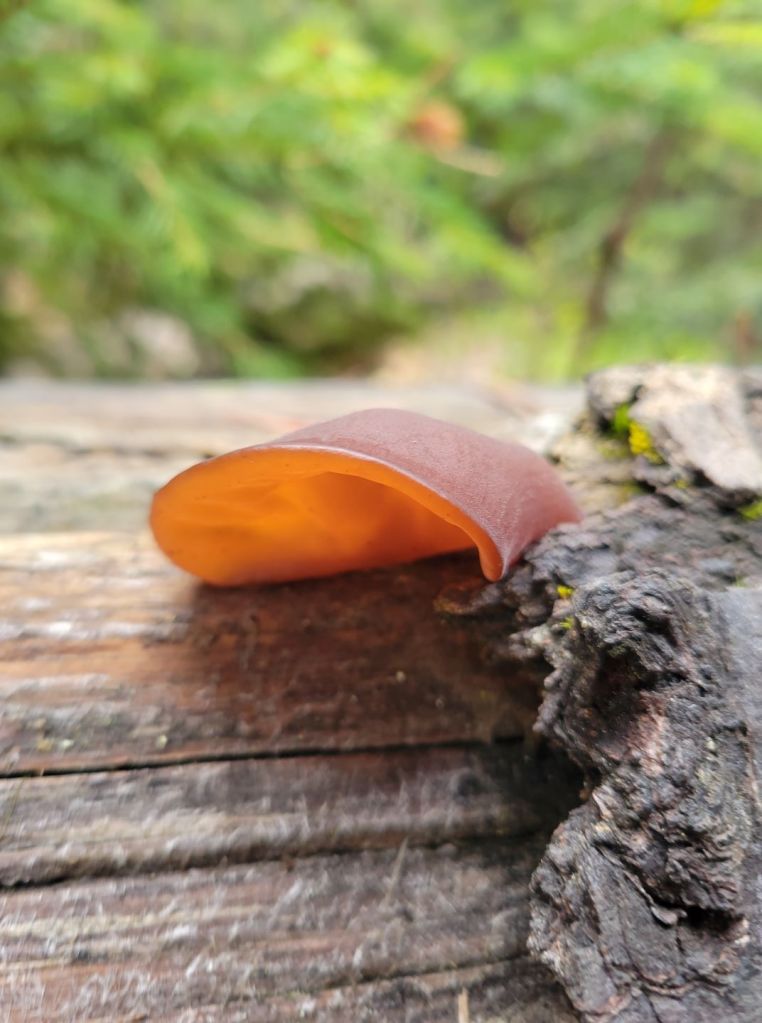
These mushrooms are kind of unique because of their silicone-like texture. One of the best ways to help identify a wood ear is by squishing it gently. A wood ear has enough moisture and flexibility that it should not imprint or change shape, and the edges should bend and not crack.
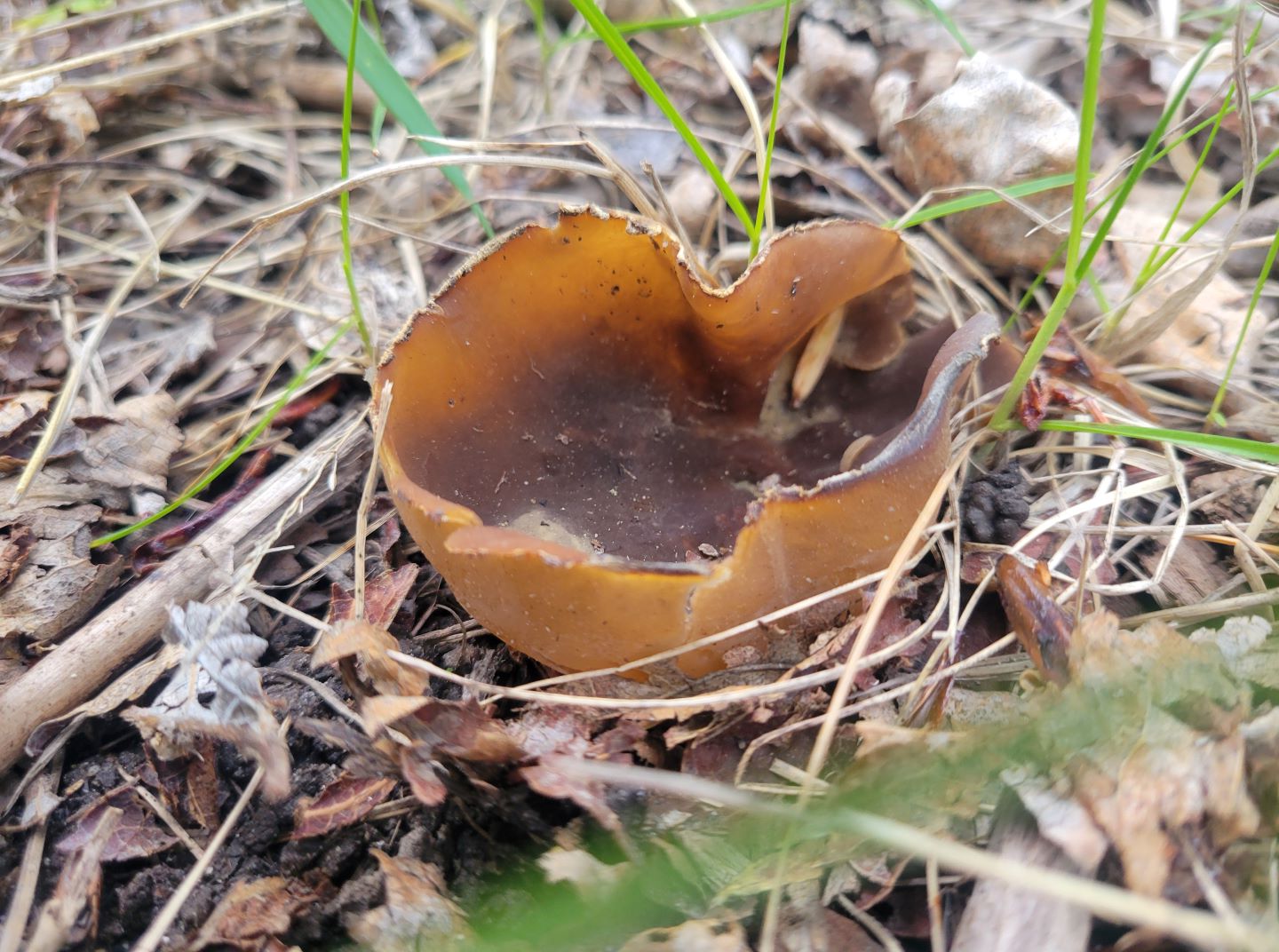
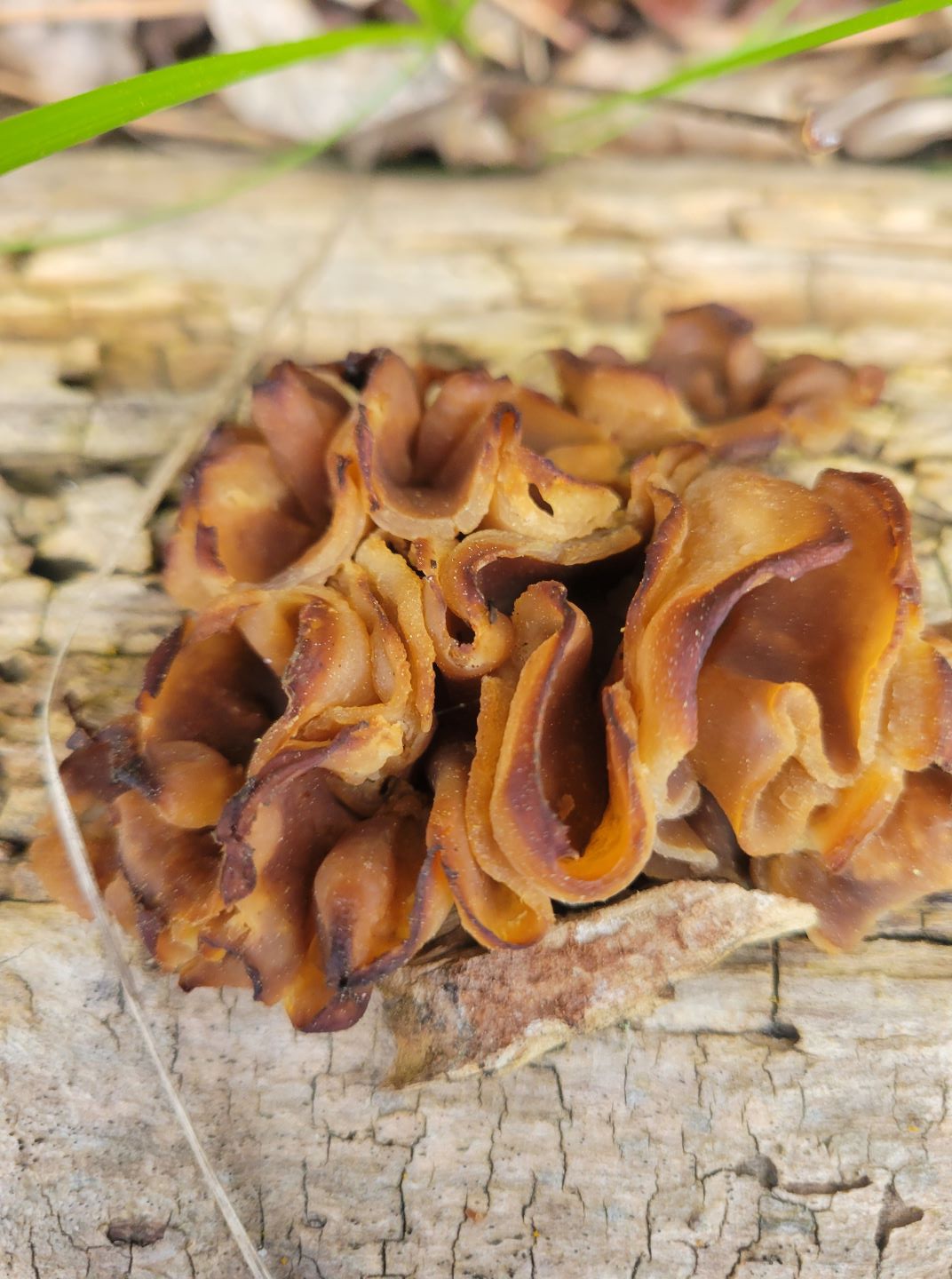
If the edges of the mushroom crack, or if the mushroom indents or squishes into a different shape when pressure is applied, then it is likely a type of Peziza (cup fungi in images below) or a different variety of jelly fungus.
Wood ears are commonly used in Asian cuisines and can be found dehydrated in many grocery stores. They are often used in soups and ramens, and can even be cooked into mushroom chips!
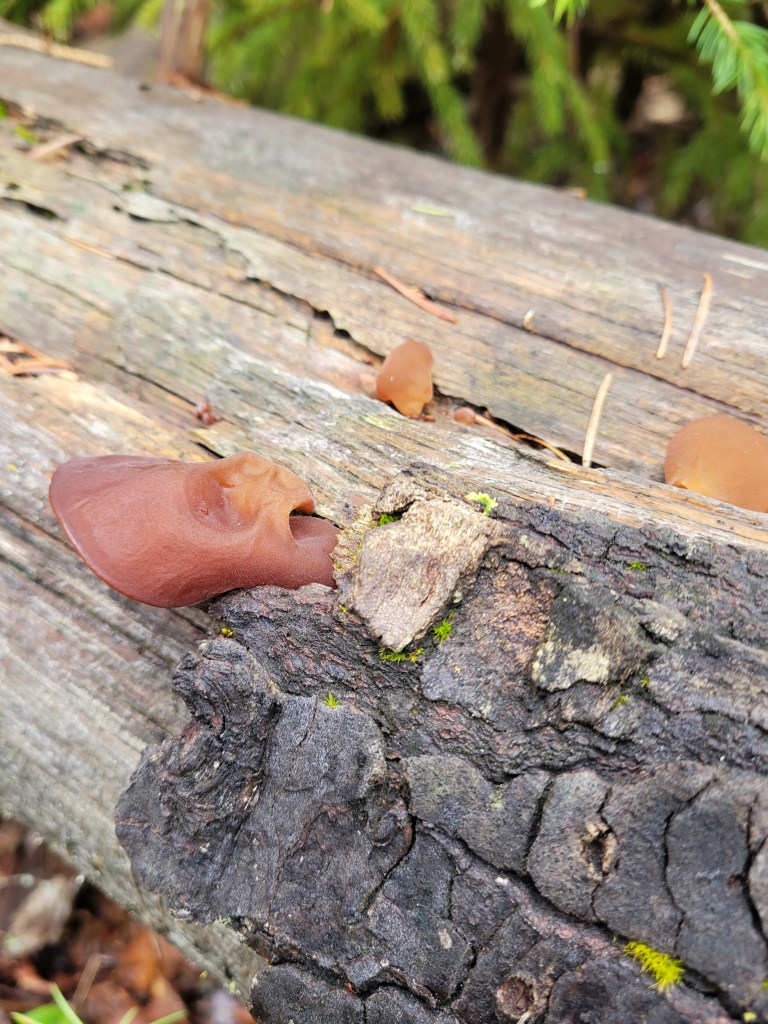
These funny little fungi are definitely one of my favorite things to find in the forest!
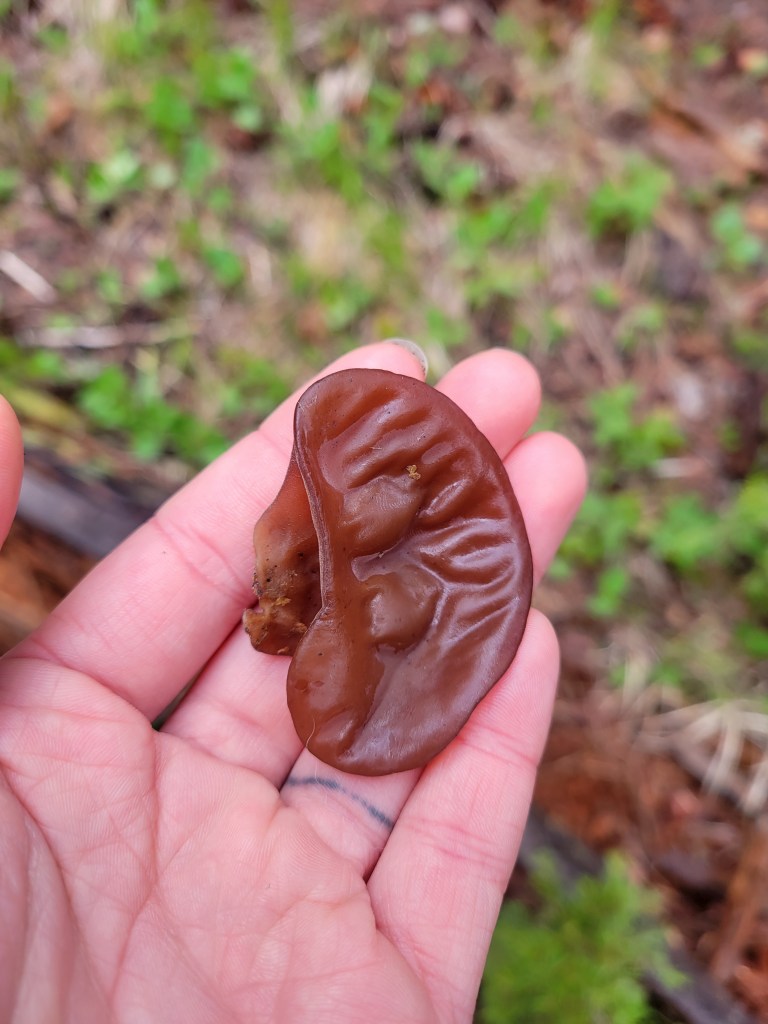
Remember to never eat anything that you aren’t 100% positive on the identification of, and always cook wild mushrooms thoroughly! It’s a good idea to cross reference field guides pertaining to your local area and the knowledge of experienced foragers before consuming any wild mushrooms.
Have you ever found wood ears? I’d love to hear your story in the comments!
Thanks for reading, and happy foraging!
-Jessica C.
 Bigfoot's Friend
Leave a reply to Fun Forest Find: Chickpea Milkvetch (Astragalus Cicer) – Bigfoot's Friend Cancel reply