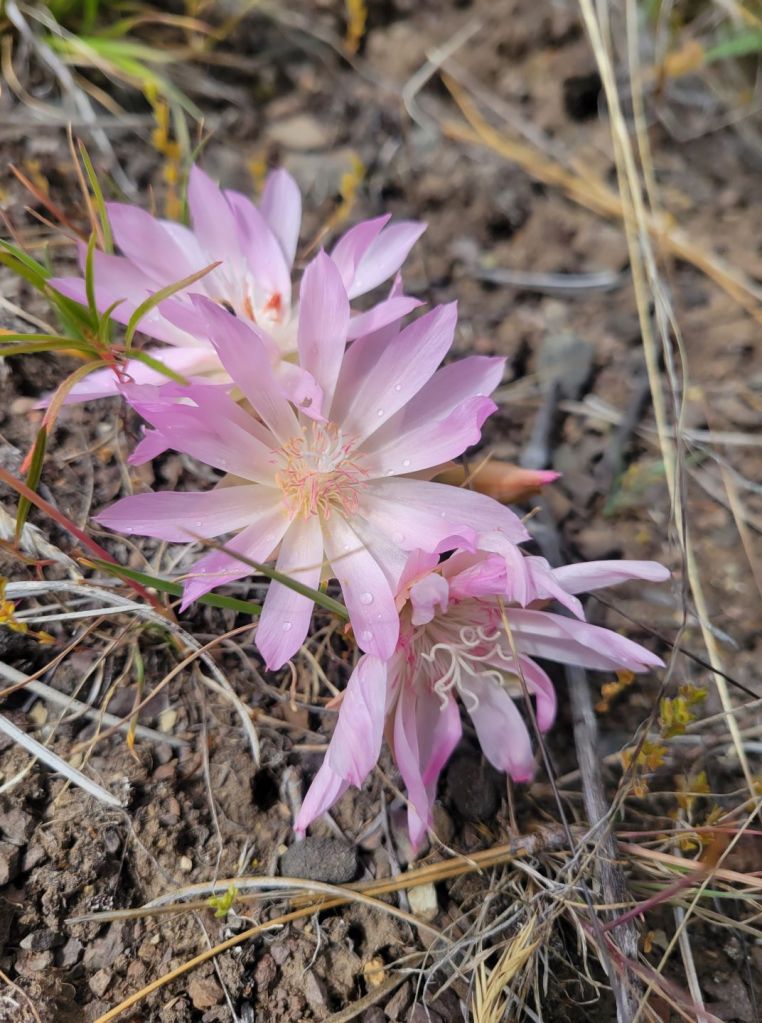
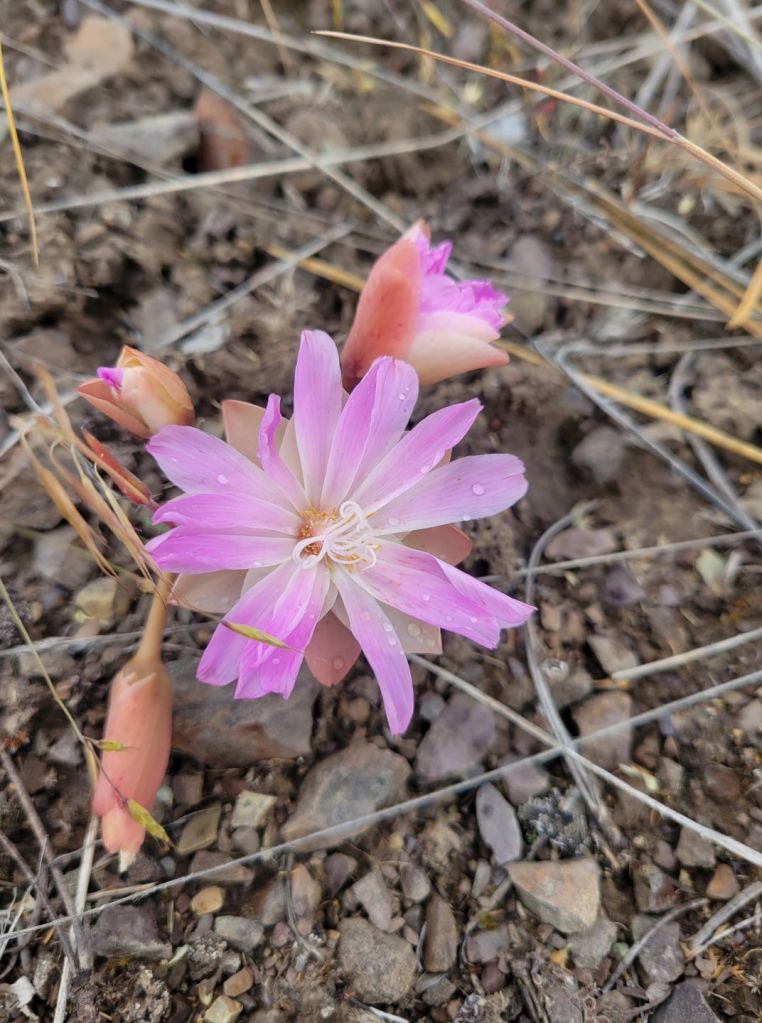
Out on a recent hike, I was fortunate enough to come across a hillside covered in beautiful, bright, blooming bitterroots.
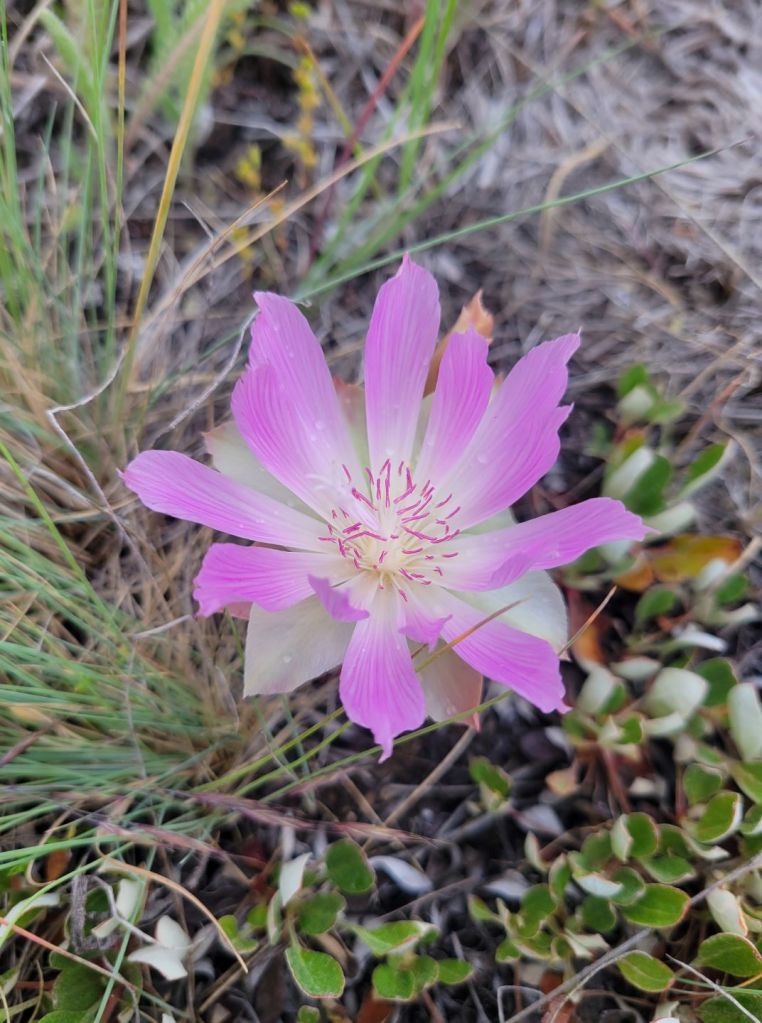
These early spring beauties decorate the sides of otherwise dry and dreary hills. They grow in elevations above 2500′. You can find them in mountainous areas and ranges.
Bitterroots grow in dry, gravely dirt and are usually accompanied by sagebrush and other dry shrubbery.

Fun Fact: Bitterroots have been known as the state flower of Montana since 1895!
The roots of the flower are actually edible and traditionally, the roots were foraged for meals and dehydrated for storage.
The root is (unsurprisingly) bitter. It was normally incorporated into dishes with more pleasant flavors to mask the bitterness. The root was rarely eaten by itself.
Now since the flavor of these roots is less than desirable, you might wonder why anyone would eat them in the first place, right?
Well, bitterroots are loaded with nutrition and have been used for medicinal purposes by the Native Americans for hundreds of years. With the incline in popularity of natural foods and medicines in todays society, the bitterroot is starting to have a comeback in the medical community.
While the benefits of the bitterroot span across quite a range of ailments, heart health seems to be at the top of the list. Historically it has been used to help in relieving heart and chest pain, and promotes regulated blood sugar and blood pressure levels!
The bitterroot has also been used to help with inflammation in the lungs and respiratory system, and is supposed to have numbing effects when eaten which can sooth sore throats and toothaches.
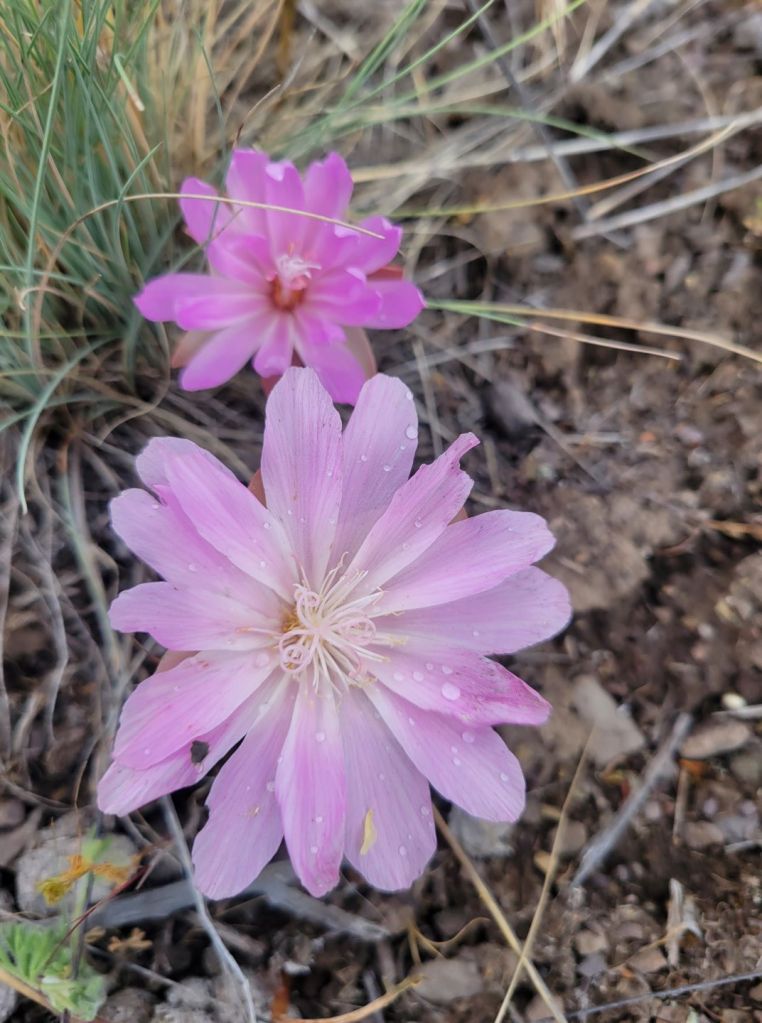
From the external beauty to the internal magic of these delicate little flowers, they pack a mighty punch of nutrition and medicinal benefits within their little roots and are a sight for sore eyes on long hikes in dry terrains.
While foraging is an exciting adventure, it is crucial to prioritize safety. Seek guidance from experienced foragers and reference reliable field guides to ensure proper identification. If you are ever unsure of any plant identification, throw it away. It’s never worth the risk of harming yourself or others if you aren’t positive that what you’ve found is safe for consumption.
Have you ever come across bitterroots? I’d love to hear about your experience in the comments below!
More on foraging:
Botanical Detective: Morel Mushroom (Morchella) Identification
Dandelions: Uncommon Facts About A Common Weed
Kentucky Coffee Beans: A Unique Midwestern Harvest
Thanks for reading, happy harvesting!
-Jess C.
 Bigfoot's Friend
Leave a reply to Fun Forest Find: Chickpea Milkvetch (Astragalus Cicer) – Bigfoot's Friend Cancel reply